


By Kennedy Elaigwu Awodi For far too long, Nigeria’s public policy response to poverty and social vulnerability has operated as a perpetual emergency regime. Millions of citizens caught in the crosshairs of macroeconomic headwinds, communal insecurity, and regional climate shocks have seen government intervention primarily through the narrow lens of[Read More…]
Opinion
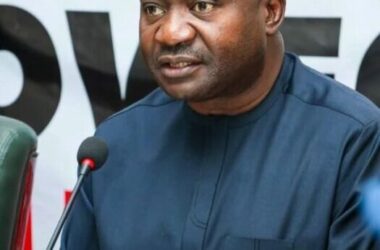
General Musa’s Blueprint: Building a War-Ready Defence for a $1T Economy
By Kennedy Elaigwu Awodi Over the past week, a series of strategic pronouncements and high-level engagements emanating from Ship House, the seat of Nigeria’s Ministry of Defence, brought into sharp focus the intricate relationship between military capabilities, governance, and national prosperity. Speaking at key forums, the Minister of Defence, General[Read More…]
Restoring Trust: Inside Nigeria’s Humanitarian Transformation
By Kennedy Elaigwu Awodi In the complex tapestry of public service, few portfolios carry a weight as emotionally demanding and structurally crucial as the Federal Ministry of Humanitarian Affairs and Poverty Reduction. Operating at the frontlines of human need, the Ministry serves as the primary bridge between government policy and[Read More…]
Why Nigeria Can No Longer Delay Reforming Its Defence Sector
By Kennedy Elaigwu Awodi In an era defined by volatile global security dynamics, asymmetrical warfare, and rapid technological disruption, national defence is no longer merely a matter of deploying troops to battlefields. It demands high-level strategic foresight, economic wisdom, institutional reform, and empathetic leadership. Since assuming stewardship of the Ministry[Read More…]
Architect of Compassion: How Dr. Bernard Doro is Reshaping Nigeria’s Humanitarian Future
For a developing nation navigating the complex intersections of economic transition, climate shocks, and regional security pressures, the Ministry of Humanitarian Affairs and Poverty Reduction is arguably one of the most critical engines of national stability. For years, however, public perception of this vital ministry was frequently overshadowed by administrative[Read More…]
General Christopher Musa and the Industrial Awakening of Nigeria’s Defence
By Kennedy Elaigwu Awodi For decades, the story of African security has been one of perpetual dependence. When insurgencies flared, banditry metastasized, or maritime piracy threatened vital economic arteries, West African nations routinely looked outward. They became perpetual buyers in a global arms market defined by exorbitant price tags, grueling[Read More…]
Connecting the Dots: How OHOPRS is Turning Compassion into Institutional Power
By Kennedy Elaigwu Awodi The premise of effective governance lies not in the temporary alleviation of suffering, but in the deliberate, courageous engineering of systems that render such suffering obsolete. In a nation where poverty and sudden vulnerability have historically been met with fragmented, short-term relief, the ongoing transformation within[Read More…]
National Security First: The Case for Supporting Nigeria’s Defence Leadership
By Kennedy Elaigwu Awodi History rarely grants a nation the luxury of passive governance during moments of existential strain. Today, Nigeria stands at a profound historical watershed, a crossroads where the choices made by its citizens, youth, and political class will determine whether the fabric of our Republic holds strong[Read More…]
Beyond the Noise: General Christopher Musa’s Courageous TV Revelation
By Kennedy Elaigwu Awodi In recent days, following a deeply insightful national television appearance on Channels TV’s Politics Today, the Minister of Defence, General Christopher Gwabin Musa (Rtd), OFR, has faced a barrage of unwarranted attacks from political sympathizers and internet commentators. These detractors have attempted to twist his candid[Read More…]
From Rhetoric to Results: How Dr. Bernard M. Doro is Quietly Revolutionizing Nigeria’s Social Safety Net
By Kennedy Elaigwu Awodi In a governance landscape often dominated by grand political gestures and fleeting public relations campaigns, genuine administrative reform stands out not for its volume, but for its velocity and measurable impact. For a long time, the Federal Ministry of Humanitarian Affairs and Poverty Reduction carried the[Read More…]



Consumer TV
FG Revenue Rises 76% to N12.5tn, Fueled by Tax and Oil Gains — Budget Office
The Federal Government’s earnings have increased by 76 percent, rising from N7.1 trillion in 2022 to N12.5 trillion in 2023, due to higher taxes and oil revenues. This information was revealed in the recently released 2025-2027 Medium Term Expenditure Framework and Fiscal Strategy Paper from the Ministry of Budget and[Read More…]