


By Paul Onehi

Nigeria’s 2027 general election may ultimately be shaped by something far deeper than party alliances, campaign slogans, or the popularity of candidates. Looming over the country is a growing crisis that cuts to the heart of democracy itself: insecurity and the steady erosion of public trust in national institutions.

Across Nigeria, insecurity is no longer viewed merely as a security problem. It has evolved into a political force, one capable of influencing voter turnout, restricting campaign activities, weakening electoral credibility, and deepening public skepticism about democracy.
From bandit attacks in the North-West and insurgency in the North-East to farmer-herder clashes in the Middle Belt, separatist tensions in the South-East, and kidnappings along major highways, millions of Nigerians are beginning to ask a troubling question: can the state still guarantee one of democracy’s most basic conditions, safety?
As 2027 draws closer, that concern is becoming increasingly urgent. Can a country struggling to protect lives truly conduct a free, fair, and trusted election?
Democracy and fear cannot exist side by side. Democracy depends on participation. It requires citizens to move freely, gather openly, speak without intimidation, and vote without fear. Insecurity weakens each of those foundations.
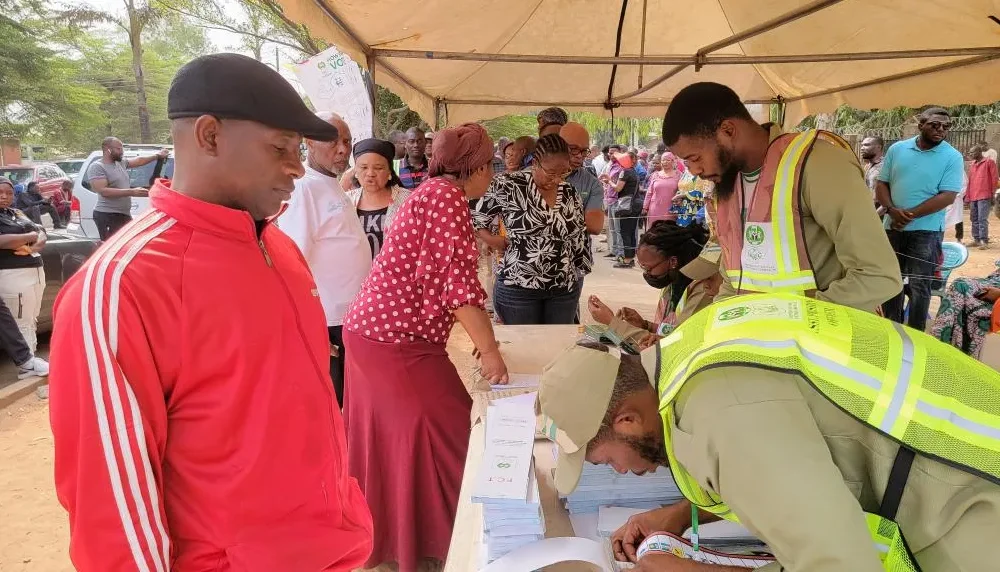
During previous elections, many communities experienced a quiet form of voter suppression, not through official restrictions, but through fear. People avoided campaign rallies, stayed away from polling units, or chose silence over political engagement because they no longer felt safe. In several volatile areas, electoral officials reportedly faced difficulties accessing communities, while concerns over violence discouraged many citizens from participating altogether.
The Independent National Electoral Commission (INEC) has repeatedly warned about the dangers that insecurity poses to electoral processes. Election observers and political analysts have echoed similar concerns, cautioning that persistent violence could undermine public confidence in democratic outcomes.
Joash Amupitan, INEC chairman, spoke on Friday in Lagos while delivering his opening address at the commission’s 2026 induction and strategic retreat for national commissioners, resident electoral commissioners and senior officials. According to the chairman, the 2027 elections will be shaped by a new demographic of voters, digital natives who are often skeptical of institutions and have “little patience for opacity”.
For many Nigerians, especially younger voters, democracy increasingly feels disconnected from everyday reality. Rising insecurity has fueled the perception that elections no longer guarantee protection, accountability, or meaningful change. And when people begin to lose faith in both security institutions and the electoral system at the same time, democracy enters dangerous territory.
Behind every statistic is a human life disrupted by fear. In several parts of Northern Nigeria, farmers have abandoned their farmlands because of repeated attacks and kidnappings. Entire communities have been displaced. Traders traveling across states now weigh security risks before thinking about profits. Parents live with constant anxiety over sending children to schools vulnerable to abductions. Families exhaust savings and sell possessions to negotiate ransom payments.
For millions of Nigerians, insecurity is no longer shocking news. It has become part of daily life. That normalization of fear could have serious consequences for the 2027 elections. A trader in Kaduna who fears traveling on election day may decide not to vote. A displaced family in Benue may struggle to access voter registration information. A young graduate frustrated by unemployment and insecurity may conclude that political participation changes nothing.
Individually, these decisions may appear small. Collectively, they can reshape electoral outcomes.
Youth Frustration and the Collapse of Political Confidence Nigeria has one of the youngest populations in the world, yet many young people feel increasingly alienated from the political system. The frustration goes beyond insecurity alone. It is tied to unemployment, inflation, corruption, poor governance, and the widening gap between political promises and lived reality.
The #EndSARS protests in 2020 revealed not only anger toward police brutality but also a deeper crisis of trust in governance. Since then, worsening economic hardship and rising insecurity have intensified political disillusionment among many young Nigerians.
For some, migration now feels more realistic than civic engagement. The growing “Japa” movement reflects more than economic ambition; it also signals declining faith in Nigeria’s future. If young voters — who make up a significant portion of the electorate — continue losing confidence in democratic institutions, voter apathy could become one of the greatest threats to the legitimacy of the 2027 election. Democracy weakens when citizens participate without hope or withdraw entirely from the process.
Another growing concern is the possibility of insecurity being exploited for political advantage ahead of the elections.
Historically, fear and instability have sometimes been used during election periods to suppress turnout, intimidate opposition strongholds, or inflame ethnic and regional tensions. In today’s already polarized political climate, insecurity could easily become a propaganda tool instead of a problem addressed through serious policy reforms.
Political actors may selectively frame security issues to influence public emotions, deepen distrust, or shape voter perceptions. At the same time, social media misinformation and AI-generated propaganda could further distort public understanding during the election season.
Without transparent institutions and credible communication, the line between genuine security concerns and political manipulation may become increasingly difficult to distinguish.
Trust remains the backbone of every functioning democracy. Citizens do not vote simply because they support candidates. They vote because they believe the process matters, because they trust that their participation can produce legitimate outcomes. But that belief appears increasingly fragile.
Many Nigerians now openly question whether votes truly count, whether democratic institutions remain independent, whether security agencies can stay politically neutral, and whether elections can even be conducted safely in conflict-prone areas. These concerns are not abstract fears. They are rooted in lived experiences.
The challenge before Nigeria is therefore larger than simply organizing another election. The real challenge is rebuilding public confidence in democratic participation itself.
What Must Change before 2027 Election. Security alone will not save Nigeria’s democracy. But without security, democracy cannot function effectively. The government must move beyond reactive responses and demonstrate a measurable commitment to protecting citizens. Electoral institutions need stronger transparency, better preparation, and improved coordination in conflict-prone areas. Security agencies must remain professional, accountable, and politically neutral throughout the electoral process.
Political leaders also have a responsibility to avoid inflammatory rhetoric capable of escalating tensions. Civil society groups, journalists, and digital platforms have equally important roles to play. In an era dominated by misinformation, accurate reporting and fact-based political conversations are essential to reducing panic, manipulation, and electoral violence.
Most importantly, Nigerians themselves must continue demanding accountability long before election season begins.
Nigeria’s 2027 election could become one of the defining democratic tests of the country’s modern history. The outcome will determine more than political leadership. It may also reveal whether Nigerians still believe democracy can improve their lives in the face of insecurity, economic hardship, and growing distrust. A democracy in which citizens are afraid to travel, afraid to gather, or afraid to vote cannot fully claim to reflect the will of the people.
The greatest threat to Nigeria’s democracy may no longer be political competition itself, but the gradual collapse of public trust. And once trust disappears, elections risk becoming little more than procedural exercises rather than genuine expressions of democratic choice.