


By Kennedy Elaigwu Awodi

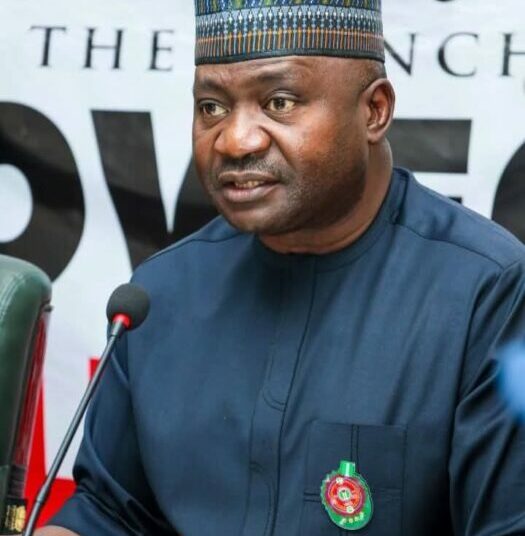
When I first came across the viral reports alleging that the Minister of Defence, General Christopher Musa (Rtd), had resigned from his position, my immediate reaction was a mix of skepticism and deep concern. Within hours, the rumor had spread across social media feeds, online blogospheres, and several digital news outlets. It took a direct, unambiguous rebuttal from the Minister himself, speaking at the Presidential Villa in Abuja, to douse the flames of a completely fabricated story.

General Musa made it clear that he had never discussed resigning and remained firmly at his post, adding that he intended to explore legal remedies against those responsible for orchestrating the lie.
While fake news is an unfortunate reality of the modern digital age, its propagation in matters concerning national defense is not a harmless distraction. As someone who pays close attention to our national conversation and the ethical boundaries of public communication, I find this episode to be a sobering wake-up call. Media outlets across Nigeria, both traditional and digital, must recognize that their reportage on security affairs carries immense national consequences. Speed cannot continue to supersede accuracy.
In our rush to be first with the news, we risk becoming vector points for misinformation. Security reportage is fundamentally different from political posturing or entertainment journalism. When a news room publishes an unverified claim that the head of a nation’s defence ministry has abruptly vacated office, the fallout is immediate. It generates unnecessary anxiety among citizens, sends confusing signals to international diplomatic and economic partners, and, most dangerously, can destabilize troop morale on the frontline.
I strongly believe that media houses must treat information originating from anonymous online sources with extreme caution. The Minister’s observation, that these malicious rumors are often birthed by disgruntled interests seeking to distract from operational momentum, is a point we in the media cannot afford to ignore. When news organizations fail to perform basic due diligence, such as contacting the Ministry’s media office or official spokespersons before hitting publish, they inadvertently play into the hands of security saboteurs.
Journalistic freedom comes with institutional responsibility. A headline may generate thousands of clicks and drive temporary traffic, but if it corrodes public trust in the country’s security architecture, the long-term cost to the nation is devastating. Editors and publishers must enforce rigorous gatekeeping standards: verify twice, confirm through official channels, and publish once.
What makes this recent wave of sensationalism so frustrating to me is that it distracts the public from the actual, measurable work happening within the defence sector. While speculative rumors dominated the headlines, substantive developments in national security received far less spotlight than they deserved.
If we look closely at the record of the Ministry of Defence in recent times, several key milestones stand out:
Sustained Campaign Against Crude Oil Theft: The Ministry has significantly deepened collaborative frameworks between the Armed Forces, regulatory bodies, and operators in the oil and gas sector. Operations under Joint Task Forces like Operation DELTA SAFE have aggressively targeted illegal refining sites, pipeline vandalism, and crude oil theft in the Niger Delta. These strategic interventions are directly safeguarding critical economic infrastructure and bolstering national revenue.
Relentless Counter-Insurgency & Anti-Banditry Push: Across the North-East and North-West, tactical clearance operations by the joint forces have yielded steady results. Troops have neutralized high-profile terrorist logistics suppliers, rescued scores of kidnapped victims, and thwarted coordinated attacks on rural communities. The sustained pressure on terrorist networks like ISWAP and bandit syndicates demonstrates a clear operational direction.
Also, the Ministry has actively pushed for greater self-reliance in military hardware production through the Defence Industries Corporation of Nigeria (DICON). By coordinating initiatives like the upcoming African International Defence Exhibition (AFRIDEX), the Ministry is positioning Nigeria as a regional leader in defence manufacturing and technological innovation.
In addition, recognizing that modern warfare relies heavily on intelligence and data, the Ministry has expanded partnerships with key professional institutions, including the Nigerian Institution of Surveyors (NIS), to integrate advanced spatial mapping and geospatial intelligence into territorial defence operations. These achievements represent the core narrative that the media ought to be interrogating, analyzing, and reporting to the public.
I do not advocate for a media that acts as a mere public relations apparatus for the government. A vibrant, critical, and independent press is essential for a healthy democracy. We must continue to ask tough questions, demand accountability, and expose lapses where they exist.
However, there is a distinct boundary between investigative scrutiny and reckless sensationalism. In times of national security challenges, the press and the defence establishment should share a fundamental objective: the safety, stability, and sovereignty of the nation.
Moving forward, I urge media outlets to build stronger, direct lines of communication with defence spokespersons and official press desks. Likewise, security agencies must remain accessible and proactive in providing timely updates so that rumors find no fertile ground to grow.
Our duty as journalists and commentators is to inform the public with facts, context, and truth. Let us leave clickbait behind and commit to reportage that upholds both national security and the integrity of our profession.
Kennedy Elaigwu Awodi wrote from North Carolina, USA.
Email: awodiken@outlook.com