




By Kennedy Elaigwu Awodi

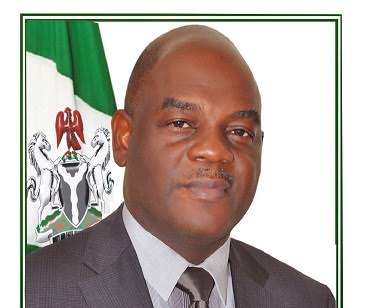
For decades, the standard public dialogue surrounding higher education in Nigeria was framed around deficiency: inadequate infrastructure, unequipped laboratories, outdated learning materials, and research outputs destined only for library shelves. Yet, systemic transformation rarely happens through mere complaint; it emerges when leadership combines vision, institutional discipline, and decisive execution. Under the leadership of its Executive Secretary, Arc. Sonny S. T. Echono, the Tertiary Education Trust Fund (TETFund) has steadily shifted from being a passive funding conduit into an active engine of national development.

Recent milestones, ranging from regional academic publishing hubs and specialised clinical frameworks to strategic public-private partnerships, reflect more than routine agency activity. They demonstrate a coherent, forward-looking strategy orchestrated by an administrator who views educational infrastructure not simply as physical structures, but as the foundational catalyst for Nigeria’s knowledge-driven economy.
The commissioning of the multi-million-naira Academic Publishing Hub at Nnamdi Azikiwe University (UNIZIK) illustrates Echono’s pragmatic approach to structural reform. For years, Nigerian academics have faced substantial hurdles in producing, publishing, and distributing high-quality indigenous textbooks and peer-reviewed research. The reliance on expensive foreign publishing channels not only drained institutional budgets but also alienated academic research from local realities.
By strategically establishing state-of-the-art publishing hubs across geopolitical zones, Echono is systematically decentralizing intellectual infrastructure. This model ensures that researchers in the South-East and across Nigeria have direct access to modern printing and editorial assets. It lowers the cost of quality educational materials for students while asserting Nigeria’s academic independence.
Under Echono’s guidance, TETFund’s mandate has expanded beyond general classroom blocks into targeted, high-impact societal interventions. The inauguration of a national committee tasked with establishing specialized Autism and Specialised Care Centres across Nigeria’s six geopolitical zones represents a profound shift toward inclusive development.
By integrating these centres into university teaching hospitals and medical colleges, Echono is bridging a persistent gap between clinical research and public health execution. This initiative achieves two critical objectives simultaneously:
Expands Clinical Care: It creates dedicated diagnostic and therapeutic facilities for individuals with neurodevelopmental conditions who have historically suffered from institutional neglect.
Drives Specialized Training: It positions Nigerian universities to train the next generation of researchers, occupational therapists, and clinical specialists locally, building long-term institutional capability.
Mobilizing Capital and Building Strategic Alliances.
Perhaps the most significant hallmark of Echono’s tenure is his emphasis on strategic partnerships and financial sustainability. Relying solely on government statutory allocations is insufficient for modern tertiary education. Recognizing this, Echono has championed Public-Private Partnerships (PPPs) as an essential mechanism for institutional expansion.
Rather than treating TETFund as a permanent sole funder, he has systematically encouraged vice-chancellors, rectors, and provosts to seek private co-investment, commercialize academic innovations, and build lasting industrial links. Furthermore, expanding TETFund’s scope to include partnerships with strategic institutions like the Defence Industries Corporation of Nigeria (DICON) underscores a commitment to translating research directly into national defense technology and industrial sovereignty.
Echono’s vision aligns with the modern reality of global higher education: public funding serves as seed capital, but institutional self-reliance is achieved through market integration, continuous capacity building, and innovative funding structures.
Arc. Sonny Echono brings to TETFund the precise mindset of his professional background as an architect and senior public administrator: structural discipline, attention to operational flow, and a commitment to longevity.
Under his stewardship, TETFund is moving away from fragmented, piecemeal projects toward targeted investments that strengthen the entire tertiary ecosystem. The Fund is proving that public institutions can operate with transparency, speed, and clear alignment with national economic goals.
Reforms in public education take time to yield their full harvest. Yet, by laying the groundwork, modernizing research facilities, insisting on transparency, establishing zonal hubs, and linking academic research to real-world applications, Arc. Sonny Echono is actively shaping a tertiary education system capable of powering Nigeria’s future.
Kennedy Elaigwu Awodi wrote from North Carolina, USA.