


Global communication leaders, policymakers, scholars, and practitioners from over 126 countries converged on the Transcorp Hilton, Abuja, on Monday, November 16, 2026, for the opening and Knowledge Conference sessions of the 13th World Public Relations Forum (WPRF 2026).

Hosted by the Nigerian Institute of Public Relations (NIPR) in collaboration with the Global Alliance for Public Relations and Communication Management under the theme “Responsible Communication: The Voice of the World,” the sessions issued an urgent call for ethical leadership, Artificial Intelligence (AI) guardrails, and transparent citizen engagement.

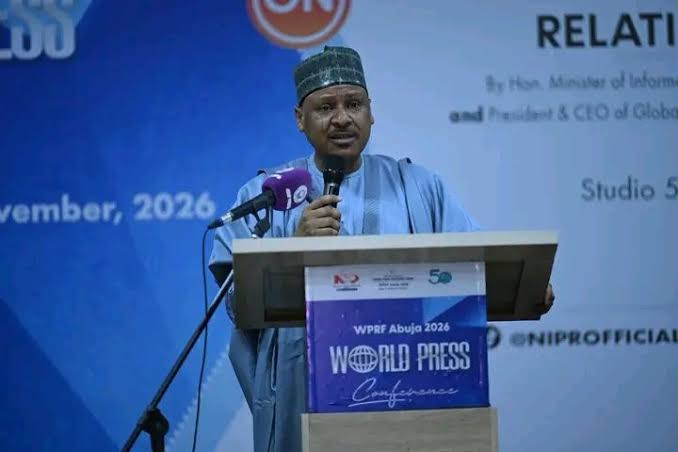
Delivering the opening remarks on behalf of Chief Host President Bola Ahmed Tinubu, the Minister of Information and National Orientation, Mohammed Idris, FNIPR, noted that Nigeria’s historic selection as the first West African host affirms the country’s rising global profile and professional capacity. “By choosing Nigeria to host the 2026 World Public Relations Forum, the global public relations community has recognised our growing international profile, professional capacity and contribution to global communication,” he stated.
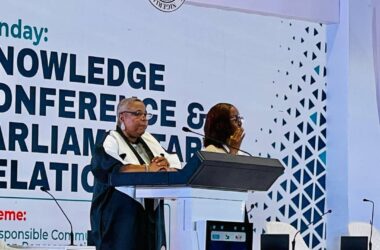
In the Parliamentary Relations segment, Speaker of the House of Representatives, Rt. Hon. Abbas Tajudeen, GCON, urged communication professionals and lawmakers to bridge the trust deficit between governments and citizens through honest, accessible explanations of public policies.
He noted that while the ongoing economic reforms of the Tinubu administration are designed to address structural weaknesses and foster long-term stability, effective communication is essential to ensure citizens understand and feel the tangible benefits of governance.
Chairman of the Occasion, Senator Dr. Osita Izunaso, FNIPR, described public trust as the “ultimate currency” in leadership and enterprise, warning that unchecked AI and deepfakes pose existential threats that demand urgent legislative safeguards.
Echoing this concern, NIPR Vice President Prof. Emmanuel S. Dandaura, FNIPR, cautioned that AI has made deception cheaper and more convincing, insisting that the profession’s enduring value lies in moral courage, accountability, and sound human judgment rather than mere publicity.
Host of the Knowledge Conference and Vice-Chancellor of Chukwuemeka Odumegwu Ojukwu University (COOU), Prof. Kate Azuka Omenugha, FNIPR, advocated making Communication Ethics a compulsory general studies course across all university disciplines to curb student misuse of AI and social media. “If we communicate right in the classroom, and we get it right in the parliament, I tell you, we will get democracy right,” she declared.
Earlier, NIPR President Dr. Ike Neliaku, FNIPR, and Global Alliance President and CEO Prof. Justin Green spotlighted the global campaign to adopt Responsible Communication as the 18th United Nations Sustainable Development Goal (SDG), while celebrating Africa’s historic rise to six seats on the Global Alliance board—the highest regional representation worldwide.
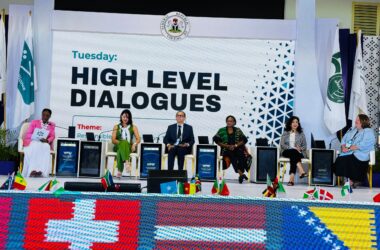
During two high-level plenary panels, international experts deepened the discourse on technology, sustainability, and inclusion. Following a keynote by Chartered Institute of Public Relations (CIPR) UK CEO Alastair McCapra, Panel 1, moderated by Kenyan PR strategist Peter Mutie and featuring Adrian Cropley, OAM (Australia) and disability inclusion advocate David Obinna Anyaele, examined how to rebuild social cohesion amid misinformation.
Panelists stressed that young people must be given an active seat at the governance table, while Anyaele emphasized that ethical communication must be accessible to Nigeria’s estimated 35 million persons with disabilities, commending WPRF 2026 for deploying live sign-language interpretation.
Panel 2, preceded by a keynote from African Union Director of Information and Communication Ms. Leslie Richer and featuring Prof. Amiso George (Texas Christian University, USA), critiqued performative Environmental, Social, and Governance (ESG) claims. Panelists concluded that modern practitioners must serve as institutional conscience-keepers, ensuring corporate and public commitments translate into verifiable, transparent stakeholder impact.