

The industrial landscape of Sub-Saharan Africa is undergoing a profound structural transformation driven by large-scale energy infrastructure investments. Historically reliant on exported raw crude and imported refined petroleum products, the continent has faced persistent supply vulnerability, foreign exchange pressures, and volatile domestic energy costs.

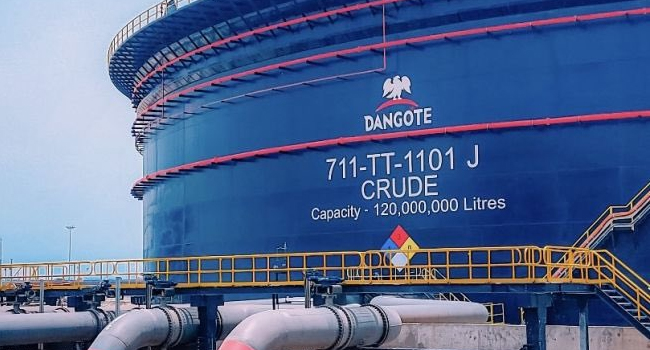
The establishment of massive processing hubs represents a decisive shift toward domestic industrialization, regional self-reliance, and value-added manufacturing. Following the launch of its mega-refinery in Lagos, Nigeria, the Dangote Group has set its sights on East Africa, announcing plans for an even larger integrated refining and power facility in Lamu, Kenya.

This strategic expansion underscores the growing role of Pan-African corporate capital in bridging the continent’s infrastructure deficit while altering trade dynamics across East and West Africa.
While the Dangote Petroleum Refinery in Lagos set a global benchmark as a massive single-train facility, the proposed Lamu Refinery is engineered to exceed its predecessor in both processing volume and integrated utility output.
Speaking during a high-level state visit by Kenyan President William Ruto to the Lagos complex, Aliko Dangote outlined the technical enhancements designed for the East African facility.
The addition of a delayed coker unit is particularly strategic. A coker allows refineries to process heavier, lower-cost vacuum residues and heavy crude slops, upgrading them into high-value light products (such as gasoline, diesel, and jet fuel) while producing petroleum coke as a byproduct. This technical capability increases operational flexibility regarding feedstock selection, enabling the plant to optimize refining margins regardless of crude oil market dynamics.
Beyond fuel production, the Lamu project serves as a major utility installation. Processing 700,000 barrels per day requires immense electrical energy to drive compressors, pumps, and thermal units. To guarantee operational continuity in a region where grid stability remains a concern, the refinery design incorporates a dedicated 1,000-megawatt (MW) power plant.
This dual-purpose energy strategy yields clear mutual benefits by granting the refinery complete operational autonomy, shielding continuous processing loops from external power outages through captive generation, while simultaneously providing substantial national grid support by feeding 500 MW of excess capacity directly into Kenya’s power supply to stabilize the grid, lower industrial production costs, and expand public electrification efforts.
The execution of the Lamu Refinery represents an alignment of corporate vision and governmental policy. Following bilateral engagements, President William Ruto confirmed the groundbreaking date for September 30, 2026, signaling that Kenya has already allocated the necessary land and moved to streamline regulatory hurdles to prevent project delays.
For Kenya and the broader East African Community, the project delivers immediate macroeconomic relief through substantial foreign exchange savings, eliminating the heavy drain on scarce currency reserves previously required to import refined fuels. Alongside this financial stabilization, the construction and operational phases will drive extensive human capital development by creating thousands of high-value technical jobs in chemical, mechanical, structural, and petroleum engineering, as well as across specialized business services.
Beyond national borders, a domestic processing hub of this magnitude dramatically strengthens regional energy security and reshapes local trade dynamics. By establishing Kenya as the primary refined fuel supplier for landlocked neighbors across East and Central Africa, the facility insulates neighboring economies from global supply disruptions while significantly improving regional trade balances.
By scaling up the blueprint tested in Nigeria, the Dangote Group’s investment in Lamu demonstrates how private capital and targeted public policy can collaborate to build the industrial foundation required for Africa’s long-term economic independence.