


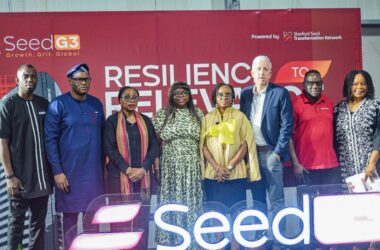

For decades, the annual gathering of the Association of Advertising Agencies of Nigeria (AAAN) served as a sanctuary where creative directors, agency executives, and media buyers toasted past pitch wins over fine wine. This year, at the 53rd Annual General Meeting and Congress, held in Lagos, the atmosphere was markedly different.
Faced with a media landscape undergoing relentless disruption, Nigeria’s advertising leaders gathered under a provocative theme: “ADvolution: The End of Advertising as We Know It and How to Win What Comes Next”.

Over two dense, packed days, the industry confronted a reality that can no longer be ignored: the traditional era of interruption-based television commercials, static billboards, and passive consumer audiences is officially over. In its place is a fast-paced ecosystem driven by generative artificial intelligence, dynamic creator economies, and demands from clients for direct, measurable business outcomes.
Opening the conference, AAAN President Lanre Adisa delivered a sharp, grounded assessment of the industry’s current crossroads. Moving past comfortable pleasantries, Adisa urged agencies to view technology not as an existential threat, but as a catalyst for creative transformation.
”The greatest challenge facing the industry is not change itself, but the risk of failing to adapt alongside it,” Adisa declared. “We must build the capabilities needed to thrive in a fast-evolving environment, stressing the urgent need for talent development and a stronger understanding of how emerging technologies can work alongside human creativity.”
Adisa’s message set the tone for the entire congress: agencies can no longer afford to operate simply as external execution partners executing client orders. To survive, they must transition into tech-enabled strategic advisors who shape brand culture from the inside out.
If there was one thread weaving through every keynote presentation and hallway discussion, it was the integration of artificial intelligence into the creative process.
Tomiwa Aladekomo, Chief Executive Officer of Big Cabal Media, tackled the issue head-on during his keynote address. While acknowledging that generative AI tools have fundamentally altered speed and asset production, Aladekomo rejected the doomsday narrative predicting the extinction of the creative strategist.
”Artificial intelligence is changing the rules of engagement, but human creativity remains our biggest differentiator,” Aladekomo emphasized. “Technology can support the creative process, but it cannot replace human intuition, deep cultural nuance, and the ability to spark original, emotional connections.”
From the client perspective, Dr. Meksley Nwagboh, Division Head of Brands and Communications at Fidelity Bank Plc, brought a hard-nosed, commercial lens to the stage. Nwagboh reminded agency executives that brand custodians are facing unprecedented margin pressures.
The era of relying solely on vanity metrics, such as social media impressions, reach, or broad recall scores, has ended. Modern Chief Marketing Officers require transparent performance data that directly connects agency campaigns to sales funnels, market share growth, and bottom-line revenue.
The operational realities of this shift were vividly debated during the central panel session, titled Navigating the New Business Realities. Moderated by creative strategist Oyindamola Fakile, the panel brought together diverse voices from across the agency, brand, and digital landscape:
Damola Richard Salvador (CEO/Lead Strategist, digiSplash), Tobiloba Beckly Williams (Creative Director, 7even Interactive), Olusegun Akinyemiju (Marketing Manager, Guinness Nigeria), and Rotimi Ade-Onajobi (Creative Director, Spice 360).
Three major operational shifts emerged from the session: From Retainers to Value-Based Pricing: Panelists argued that the historic reliance on flat media-commission models or basic monthly retainers is suffocating agency profitability. The future belongs to performance-linked pricing structures where agencies share both the risk and the upside of market growth.
Real-Time Cultural Agility: The traditional three-month campaign production cycle is increasingly outdated. Agencies must operate more like agile newsrooms, capable of jumping on cultural moments within hours using lean production tools.
The Creator Economy Synergy: Brands no longer view social media influencers as mere distribution megaphones. Instead, leading agencies are treating content creators as co-writers and creative directors who hold genuine trust with niche communities.
Away from the formal stage, informal discussions throughout the hotel corridors focused heavily on regulatory compliance, talent retention, and institutional equity.
Executives discussed the evolving oversight of the Advertising Regulatory Council of Nigeria (ARCON). While acknowledging the necessity of regulatory frameworks that promote local content and protect Nigerian jobs, agency leaders stressed the importance of flexible policies that keep pace with borderless digital advertising realities.
The economic climate was another persistent topic. Rising operational costs and currency fluctuations have pushed agencies to streamline overhead, invest heavily in digital upskilling, and build collaborative consortia rather than trying to own every capability in-house.
The congress reached its emotional peak on Friday evening with the AGM Gala and Awards Night. Beyond honoring veteran stalwarts, the spotlight turned sharply toward the future through the presentation of the Rising Stars Awards. Four young leaders, Tobi Adesina (Insight Publicis), Fuad Balogun (Noah’s Ark Communications), Anita Adekunle (Playhouse Communications), and Olugbenga Jacobs (Ogilvy), were celebrated for pushing creative boundaries and demonstrating how the next generation intends to win what comes next.
As attendees departed, the overarching takeaway from the 53rd AAAN AGM was clear: advertising is not dying, it is undergoing a profound mutation. The agencies that will lead Nigeria’s creative economy into the decade ahead will not be those holding tightly to legacy playbooks, but those who lean boldly into algorithm-driven tools while anchoring their work in authentic human insight. The end of advertising as we knew it may well mark the beginning of its most exciting era yet.