
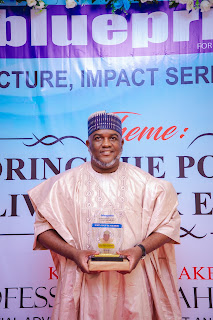



Abuja, Chairman of the FCT Football Association, Alhaji Adam Muktar, has called for sweeping reforms in Nigerian football, insisting that Abuja must secure representation in the Nigeria Premier Football League (NPFL), strengthen grassroots infrastructure, and shield young players from fraudulent agents if football is to truly develop in the capital.

Speaking during an exclusive interview titled “From FIFA Agent to Football Administrator,” Muktar said Abuja’s absence from the NPFL continues to hurt the city’s football identity while limiting opportunities for both players and supporters.

“I watch Nasarawa United in Lafia, or I travel to Minna to watch Niger Tornadoes, or Kano to watch Kano Pillars. Thankfully, Ranchers Bees will return next season in Kaduna,” he said. “But the real question is: what are we doing in the FCT? Sporting Supreme came very close two seasons ago, but they couldn’t make it to the Premier League.”
He pointed to Lagos as a model Abuja should be learning from, noting that the commercial capital will have three clubs in the NPFL next season — Sporting Lagos, Inter Lagos, and United City.
For Muktar, the focus now is on decentralising football development by taking competitions beyond the city centre and into the six area councils, where he believes many talented players remain undiscovered.
“When I came into the FCT FA, I realised that without proper infrastructure, you can’t even start meaningful competitions,” he said. “Everything was happening inside the city, so I decided we had to pay attention to the area councils.”
According to him, that approach is already paying off, especially in Bwari, which he described as the most successful sub-association under the FCT FA. The area has hosted matches involving Kano Pillars, Enugu Rangers, and clubs from the Nigeria National League, while Sporting Supreme’s U-19 and senior teams, both based in Bwari recently reached the FA Cup final.
“Bwari has grown into one of the strongest football centres under the FCT FA,” he said. “If you look at the recent FA Cup, they reached the final because we intentionally created opportunities for them.”
Even with that progress, Muktar warned that poor infrastructure remains one of the biggest challenges facing football development in Abuja. He expressed concern over the heavy use of the few available community pitches and criticized the increasing commercialisation of football facilities meant for public development.
He disclosed that plans to upgrade the Area 3 pitch into a major football facility eventually fell through after part of the land was allocated for a bus park.
“Unfortunately, overriding public interest meant a bus park would be built in front, so the pitch was practically lost,” he said. “These facilities are meant to encourage development, not operate purely as commercial centres. Once everything becomes business-focused, football suffers.”
Muktar also called for more accessible community pitches, better coaching systems, and stronger government commitment to grassroots football. He urged schools to allow their playing grounds to be used for community football activities, noting that access is often restricted whenever school administrations change.
Beyond infrastructure, he identified fake football agents as one of the fastest-growing threats facing young Nigerian players and their families.
According to him, scammer regularly take advantage of desperate parents by offering fake trials and contracts in countries like Turkey and Lithuania, only to demand huge sums of money for opportunities that do not exist.
“Parents send me messages every single day asking whether certain letters or academies are genuine,” he said. “It has become a multi-billion-naira scam industry.”
Muktar said the problem is made worse by the growing obsession with quick success, with many families unwilling to allow players develop through the proper football structure.
“Everybody wants shortcuts,” he said. “You cannot take a child from primary school straight into university and expect him to survive there. Football works the same way. Players have to grow through the right stages.”
He said the FCT FA has made it a priority to educate families on how to identify legitimate football pathways while also expanding grassroots competitions capable of creating genuine opportunities within Nigeria.
On the national team, Muktar did not hold back in criticising Nigeria’s football administration. He insisted that the Nigeria Football Federation (NFF) must take responsibility for the Super Eagles’ failure to qualify for recent major tournaments.
“We missed the last World Cup, and at this rate we could miss the next one as well,” he said. “When Nigeria fails to qualify, the NFF must be held accountable because they are responsible for administering football in this country.”
He argued that Nigerian football urgently needs a long-term master plan that defines the country’s football identity from the grassroots level up to the senior national teams.
Muktar also questioned the increasing dependence on foreign-born players in the Super Eagles, warning that homegrown talents are gradually being pushed aside.
“Are we comfortable with a situation where foreign-born players dominate the national team while players developed here are ignored?” he asked. “What happens to the homegrown players who never get the opportunity?”
According to him, even national team coaches have struggled to identify NPFL players capable of competing at the highest level, which he believes reflects the weakening standard of the domestic league.
Still, Muktar maintains that money alone will not solve Nigerian football’s problems.
“I don’t believe funding is the biggest issue,” he said. “Once you create the right environment, put the right people in place, and build trust, the investment will come naturally.”
He warned that Nigeria risks losing relevance in global football if the country continues missing major international tournaments like the 2026 FIFA World Cup.
“If Nigeria is not at the World Cup in the United States, nobody talks about us,” he said. “We stop being part of the conversation.”
On speculation surrounding his future ambitions, Muktar said becoming NFF president is not his primary goal.
“Being NFF president is not the endgame,” he said. “Whether I’m inside the system or outside it, I believe I can still contribute to Nigerian football. When the time comes, consultations will happen. It should be an open contest.”
He added that the legacy he hopes to leave behind is not one built around titles or structures, but around the number of people he has impacted through football.
“The greatest thing anyone can do is help people,” he said. “My legacy will not be a building or a competition. It will be the lives I was able to touch.”
Under Muktar’s leadership, the FCT FA has expanded youth competitions, talent discovery initiatives, women’s football, and coaching education programmes across Abuja, all aimed at positioning the capital as a model for grassroots football development in Nigeria.