




The modern global economy is a complex web of interdependencies where a tremor in one region can cause a structural collapse in another. As of April 2026, this reality is being painfully felt in Nigeria’s pharmaceutical sector. While the conflict involving Iran remains geographically concentrated in the Middle East, its economic aftershocks have traveled across the Indian Ocean and the Atlantic, manifesting in Nigeria as a quiet but deadly healthcare crisis. With drug prices surging by as much as 30% and essential supplies dwindling, the nation is witnessing the high cost of import dependency and the fragile nature of globalized supply chains.

At the heart of Nigeria’s pharmaceutical instability is a staggering reliance on foreign inputs. Approximately 80% of the country’s pharmaceutical products and nearly nearly all of its Active Pharmaceutical Ingredients (APIs), the raw chemical components necessary to create medicine, are imported. Primarily sourced from India and China, these materials are the lifeblood of Nigerian manufacturing.

Patrick Ajah, the CEO of May & Baker Nigeria Plc, has noted that the impact of the Middle East conflict was almost instantaneous. Within weeks of the escalation, the price of Paracetamol APIs alone jumped by 28%. This spike was not due to a lack of raw chemicals in Asia, but rather the logistical nightmare of getting those chemicals to African shores. When shipping corridors like the Strait of Hormuz are threatened or blocked, the world’s maritime “artery” is constricted. For Nigeria, this means cancelled orders, delayed shipments, and a sudden, sharp increase in the “landed cost” of every tablet and syrup produced locally.
The conflict has transformed the simple act of shipping into a high-stakes gamble. Global shipping companies have been forced to reroute vessels away from volatile zones, often circumnavigating the Cape of Good Hope. This detour adds between 10 to 14 days to delivery timelines, creating a “lead time” crisis for manufacturers who operate on thin inventories.
Furthermore, the “war-risk” insurance premiums now slapped onto cargo ships have driven freight costs to historic highs. These logistical hurdles are compounded by a global spike in energy prices. In Nigeria, the cost of diesel, essential for powering factories and transporting goods in a country with an unstable national grid, has climbed from ₦1,100 to ₦1,800 per litre. When a manufacturer faces higher costs for raw materials, higher costs for shipping, and higher costs for electricity, the inevitable result is a price hike for the end consumer.
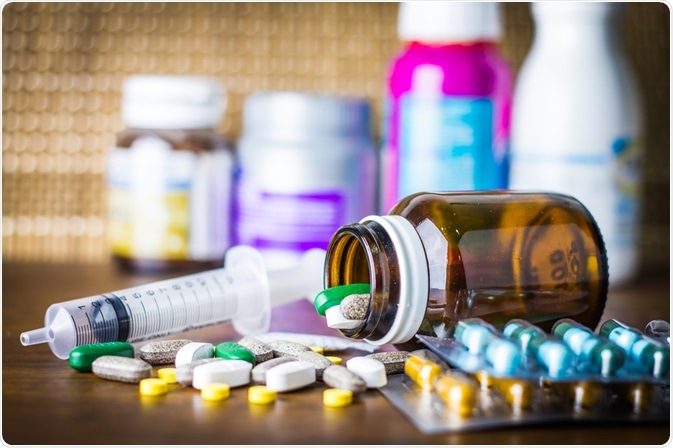
For the average Nigerian, these macroeconomic shifts translate into a grim reality at the pharmacy counter. The Pharmaceutical Society of Nigeria (PSN) reports that life-saving medications for chronic conditions, including antihypertensives, diabetes treatments, antibiotics, and oncology drugs, have seen price increases of up to 30%.
In a country where out-of-pocket spending accounts for the majority of healthcare expenses, such a surge is catastrophic. Patients are being forced to make impossible choices between buying medicine or buying food. While healthcare providers encourage the use of cheaper generics, even those are not immune to the rising costs of production. The fear among experts is that if the conflict persists, the problem will evolve from one of affordability to one of absolute scarcity. If the supply chain snaps completely, even those with the financial means may find the shelves empty.
Perhaps the most insidious threat emerging from this crisis is the potential for a resurgence in counterfeit and substandard medicines. Historically, whenever there is a gap between the demand for genuine medicine and the public’s ability to afford it, criminal elements fill the void.
The National Agency for Food and Drug Administration and Control (NAFDAC) has long fought to sanitize the Nigerian drug market, but rising prices and shortages provide the perfect “black market” conditions for fake drugs. These substandard products not only fail to treat illnesses but often lead to organ failure or death, turning a supply chain problem into a national public health emergency.
The current crisis serves as a harsh reminder of the lessons that should have been learned during the COVID-19 pandemic. In 2020, Nigeria realized that when the world shuts down, those who cannot produce their own medicine are left behind. Yet, years later, the structural reforms required to build a resilient local industry remain incomplete.
Industry leaders are now calling for a decisive shift toward local API manufacturing. However, this is not a task for the private sector alone. Producing APIs requires massive “patient capital”,long-term investments that do not yield immediate returns. To achieve this, the Nigerian government must provide low-interest or zero-interest financing, similar to the models used in India and China. Relying on commercial bank loans with double-digit interest rates is a recipe for failure in pharmaceutical manufacturing.
Furthermore, there is an urgent need for administrative efficiency. Speeding up port clearances and maintaining duty waivers on essential medical imports could provide short-term relief while the long-term infrastructure for self-sufficiency is built.
The conflict in the Middle East is a reflection reminder an an interconnected world, “national” security is inextricably linked to “health” security. Nigeria cannot afford to remain at the mercy of distant geopolitical storms. The 30% surge in drug prices is not just a statistic; it is a warning.
The clock is ticking for Nigeria to invest in its own manufacturing capabilities, diversify its sourcing, and protect its citizens from the volatile winds of global conflict. Without these changes, the health of millions will remain a casualty of wars they did not start and markets they cannot control.