





In the heart of Lagos, a city built on the dreams of migrants and the tenacity of Nigerians from all walks of life, a significant political shift began to take shape over the weekend. The air in the hall was thick not just with the humid coastal breeze, but with a palpable sense of urgency, a collective yearning for a new dawn in the Benue South Senatorial District, popularly known as Zone C.
The gathering, a high-level strategic stakeholders’ meeting, was more than just a political consultation; it was a reunion of the “sons and daughters of the soil” who have watched from a distance as their homeland grapples with stagnation. Organized by the astute Comrade Ngbede Olofu, the event served as a clarion call for those tired of the status quo and eager to rewrite the legislative history of the Idoma and Igede people.
The meeting opened with a sobering realization: Benue South stands at a crossroads. For years, the narrative of the district has been defined by untapped potential and a perceived gap in effective representation at the Red Chambers.
Honourable John Ngbede, while addressing the captive audience, set the tone with the confidence of a seasoned political strategist. “What we are doing today is a continuation of a successful movement. We have done this in Abuja, and it was a resounding success,” he noted.
“Consultation is the bedrock of true democracy, and that is why we are here in Lagos, to listen, to engage, and to present a solution.” He noted.
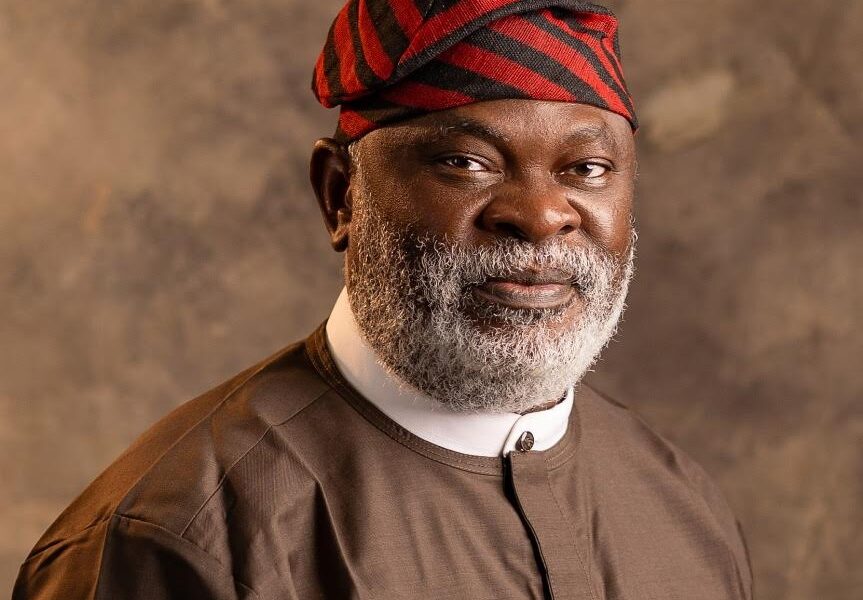
That solution, presented with unwavering conviction, is Dr. David Olofu. Running under the platform of the African Democratic Congress (ADC), Olofu is being positioned not just as a candidate, but as a bridge between the district’s glorious past and its digital future.
”We are presenting to you a gentleman,” Ngbede continued. “He is approachable, he is well-read, and most importantly, he is a listener. We were the ones who saw the vacuum and pleaded with him to give the Red Chambers a shot. He didn’t impose himself; he hearkened to the plea of the people.”
In a move that signaled a departure from divisive politics, the organizers were quick to dismiss the usual distractions. “We are not here to talk about zoning formulas,” a speaker emphasized. “We are here to talk about experience, capacity, and the intellectual depth required to represent the Idoma people with dignity.”
When Dr. David Olofu rose to speak, he did not lead with a roar, but with a grace that commanded the room. His first act was one of gratitude, to God and to the stakeholders who traveled from across the nine local governments of Benue South to be present in Lagos.
”This is the kind of Benue South I dream of,” Olofu said, his voice steady. “A place where no one is left behind, where our brothers and sisters in the diaspora and in other Nigerian cities feel a sense of ownership in what happens at home.”
Olofu’s candidacy is rooted in a deep-seated dissatisfaction with the current state of affairs. He spoke candidly about the “structural poverty” and the “enormous problems” he witnessed firsthand during his tours of the local governments, from the fertile banks of Apa and Agatu to the whispering palms of Ogbadibo.
”I have been to every corner of our zone. I have seen the struggles of our farmers and the hopelessness of our youth. After due consultation with people like Professor David Salefu, I accepted this mantle. I promise you today: I will not disappoint you.”
The highlight of the evening was the unveiling of Dr. Olofu’s legislative roadmap, a comprehensive document anchored on four pillars: People, Power, Prosperity, and Progress. Unlike the vague promises typical of election cycles, Olofu presented a technocratic yet empathetic plan centered on “Resource-based Industrialization.”
Drawing from his stint as the Commissioner for Finance and Economic Planning in Benue State (2015–2023), Olofu demonstrated a mastery of public finance and resource allocation. His agenda focuses on converting “wealth potential” into “shared prosperity.”
Key Pillars of the Olofu Mandate:
Education and STEAM: Recognizing that the world is moving toward a knowledge economy, Olofu plans to facilitate Science, Technology, Engineering, Arts, and Mathematics (STEAM) programs. This includes building standard science labs and public libraries in every local government headquarters.
The ICT Revolution:
In perhaps his most forward-looking proposal, Olofu intends to establish ICT hubs and technology centers. “Digital inclusion is not a luxury; it’s a necessity for our youth to compete globally,” he argued. He aims to connect local talent to international markets through digital skills training.
Infrastructure and Road Networks:
Olofu highlighted how poor roads limit access to healthcare and markets. His plan involves modernizing Master Plans for local government headquarters and advocating for strategic road corridors in the national budget.
Local Government Reform:
As the tier of government closest to the people, Olofu pledged to support reforms that strengthen the autonomy and institutional capacity of Local Governments.
Inclusive Governance (The Benue South Peoples Assembly):
To ensure accountability, Olofu proposed the “Benue South Peoples Assembly” and a “People’s Council.” These non-partisan bodies will allow professionals, women, and youth leaders to provide advisory input and monitor project implementation. “I want a ten-year development plan that outlives my tenure,” he declared.
Women, Youth, and Sports:
The agenda includes the construction of Skill Acquisition Centres and Mini Sports Games complexes across communities to harness the raw talent of Benue South’s vibrant youth population.
Dr. Olofu’s pitch is backed by a resume that commands respect. His experience under the administration of Dr. Samuel Ortom provided him with a front-row seat to the complexities of governance. He spoke of the “political and human dimensions of leadership” and his ability to build bridges of unity.
”This ambition is not about personal advancement,” Olofu concluded. “It is about providing a platform for a zone that has given so much to me. We are sitting on a vast reserve of wealth, from the hills of Oju to the energy of Otukpo. It is time to unlock it.”
As the meeting drew to a close, the mood was one of renewed hope. Stakeholders from the nine local governments, Ado, Agatu, Apa, Obi, Ogbadibo, Ohimini, Oju, Okpokwu, and Otukpo, seemed to reach a consensus: Benue South needs a representative who understands both the “technical aspects of governance” and the “heartbeat of the streets.”
The Lagos meeting has set the stage for what promises to be a transformative campaign. With Dr. David Olofu’s 12-point agenda and the backing of a disgruntled yet determined constituency, the narrative of Benue South may finally be on the verge of a positive rewrite.
Godwin Anyebe is a Journalist of Idoma Extraction.