




By Kennedy Elaigwu Awodi

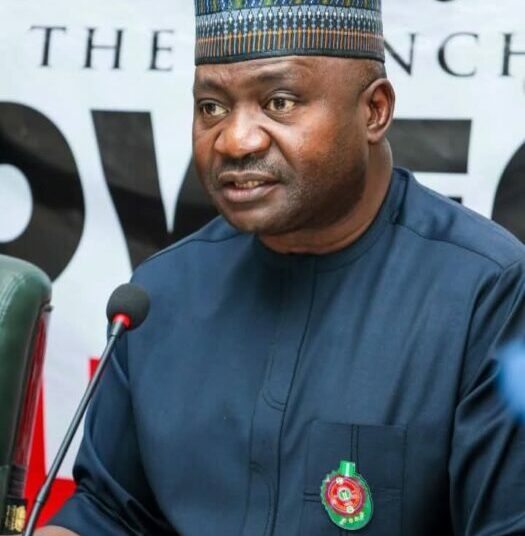
In the complex and demanding landscape of national security, leadership is measured not merely by the force of arms, but by the clarity of vision, strategic foresight, and administrative wisdom of those at the helm. For years, Nigeria’s security architecture has faced unprecedented pressure, battling asymmetric warfare, armed banditry, and territorial vulnerabilities across multiple fronts. Yet, amidst these formidable challenges, the Ministry of Defence has entered a decisive era of pragmatic transformation, guided by the steady hand, intellectual depth, and unwavering commitment of the Minister of Defence, General Christopher Musa (Rtd).

The recent slate of announcements and policy directions emanating from the Ministry of Defence this week provides a masterclass in strategic leadership. Rather than relying on outdated paradigms or reactionary measures, General Musa’s administration is crafting a comprehensive, forward-looking roadmap for national security. It is a framework that balances decisive military action with long-term structural reforms, civil-military synergy, and technological innovation.
One of the most remarkable announcements to emerge from the Ministry last week is the proposal for a gradual, structured withdrawal of military personnel from internal security duties. For over a decade, Nigeria’s armed forces have been stretched thin, performing routine domestic policing, highway surveillance, and civil order maintenance. While necessary as an emergency response, prolonged internal deployment risks overextending military assets and blurring the essential boundary between civilian law enforcement and external defense.
General Musa’s decision to initiate a phased hand-over of domestic security and highway protection to civilian law enforcement agencies and forest rangers is a mark of high-level strategic intelligence. It reflects a leader who understands institutional equilibrium. By empowering the Nigeria Police Force and specialized environmental units to reclaim their statutory roles, the Minister is not stepping back; he is stepping up to protect the core readiness of the Armed Forces. This decision allows military personnel to retrain, refit, and refocus their energies on primary defense priorities and high-value anti-terror operations, ensuring that the armed forces remain an elite, agile, and formidable fighting force.
While advocating for institutional reform, General Musa has left zero doubt regarding the government’s posture against criminal elements. His unequivocal stance ruling out ceasefires or negotiations with Boko Haram, ISWAP, and bandit syndicates sends a strong, reassuring message to the nation and a stern warning to its enemies.
Under his leadership, operational momentum has intensified dramatically. The neutralization of over 300 terrorists and bandits, including ten high-profile field commanders in recent engagements, demonstrates that the Ministry’s strategic directives translate directly into frontline tactical victories. This unyielding resolve re-establishes state authority and instills confidence in citizens who have long yearned for decisive action against perpetrators of violence.
Security in the 21st century cannot rely on manpower alone; it requires modern infrastructure and smart technology. General Musa’s proposal to reintroduce tech-enabled tollgates along major interstate corridors represents a modern, proactive approach to highway security. By integrating automated surveillance systems, real-time monitoring devices, and smart technology into critical transport corridors, the Ministry is moving toward predictive and preventative security. Travelers across the country stand to benefit from safer highways where criminal mobility is severely restricted by modern intelligence tools.
Equally commendable is the Minister’s acute awareness of the link between national security and economic stability. Recognizing that insecure rural areas threaten food security, General Musa has prioritized the protection of agricultural belts through joint operational initiatives involving armed forces, forest rangers, and local community structures. By securing farmlands and enabling farmers to return to their fields without fear, the Minister is directly safeguarding Nigeria’s agricultural economy and food supply chains.
A defense establishment is only as effective as its administrative backbone. The formal reinstatement of the Ministry’s Permanent Secretary this week underscores General Musa’s respect for administrative continuity, institutional harmony, and civil-military collaboration. Smooth administrative operations are vital for prompt procurement, resource allocation, and policy execution.
Furthermore, General Musa’s endorsement of research-driven policy models, highlighted by the recent commissioning of the TETFund Centre of Excellence in Security Management at the University of Ibadan—demonstrates an intellectual approach to governance. By integrating academic research, homegrown technological innovations, and evidence-based strategies into national defense planning, the Minister ensures that Nigeria stays ahead of evolving security threats.
Leadership in times of national trial requires courage, vision, and the ability to execute complex reforms. General Christopher Musa (Rtd) continues to demonstrate all three in abundant measure. His policy directives this week paint a portrait of a minister who is not merely managing a crisis, but actively engineering a safer, more resilient future for Nigeria.
Through a balanced combination of unyielding tactical strength, institutional reform, technological adoption, and administrative stability, General Musa is setting a new benchmark for defense governance. As these strategic initiatives take firm root, the nation can look forward with renewed optimism to a defense architecture that is efficient, modern, and fully equipped to protect the sovereignty and peace of Nigeria.
Kennedy Elaigwu Awodi wrote from North Carolina, USA.