




By Paul Onehi

Energy firm’s shares drop 10 per cent as market loses ₦642.15 billion in value
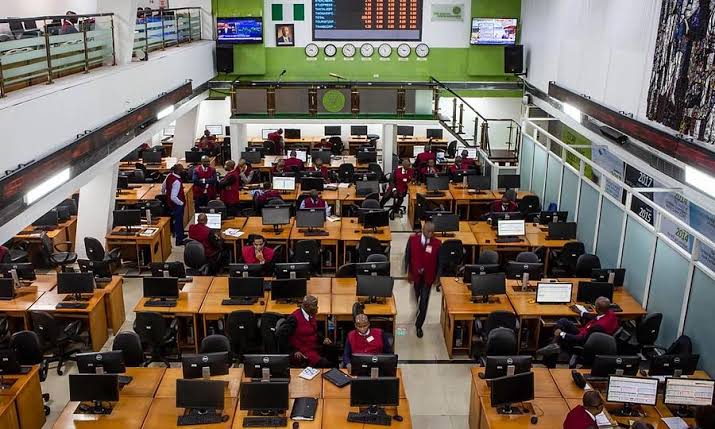
Aradel Holdings Plc topped the losers’ chart on the Nigerian Exchange (NGX) on Wednesday, November 18, as its shares fell by 10 per cent and deepened a weak session for equities.

The stock closed at ₦1,166.40, down ₦129.60 from ₦1,296 the previous day. In all, 1,045,566 Aradel shares changed hands.
The broader market followed suit. The NGX All-Share Index lost 989 points, or 0.40 per cent, to settle at 248,329.65 points from 249,318.65 on Tuesday. Market capitalisation slipped from ₦161.88 trillion to ₦161.24 trillion, erasing about ₦642.15 billion.
The oil and gas index took the hardest hit among the major sectors, down 3.47 per cent. The insurance index fell 0.68 per cent and the banking index 0.46 per cent. Industrial goods and consumer goods managed small gains of 0.12 per cent and 0.02 per cent, respectively.
Four other stocks joined Aradel on the losers’ table. E-Tranzact International fell 9.86 per cent to ₦15.55, while Trans-Nationwide Express dropped 9.26 per cent to ₦2.45. Meyer declined 8.86 per cent to ₦15.95, and Champion Breweries lost 8.85 per cent to ₦11.85.
Overall, investors traded 451.14 million shares worth ₦26.61 billion in 32,572 deals. Volume fell 20.02 per cent, though both value and the number of deals rose.
Market data does not point to any company announcement behind Aradel’s slide, which came amid wider weakness in the sector.
The fall follows the company’s nine-month 2026 results, released on October 30.
Aradel posted revenue of ₦3.95 trillion and EBITDA of ₦2.10 trillion. Profit after tax, however, stood at ₦43.3 billion, against ₦245.1 billion a year earlier. The company largely blamed a ₦529.1 billion earnout charge tied to the Renaissance acquisition of Shell’s onshore assets.
Cash metrics were stronger. Operating cash flow reached ₦2.46 trillion, and the company moved to a net cash position of ₦532.3 billion from net debt of ₦475.1 billion. It also declared an interim dividend of ₦7 per share.
The picture is mixed: strong revenue and cash generation on one side, a sharp drop in reported profit on the other. For investors, a single session’s decline does not show whether the stock is undervalued. Earnings quality, cash flow, production performance, acquisition-related obligations and future disclosures will matter more.