

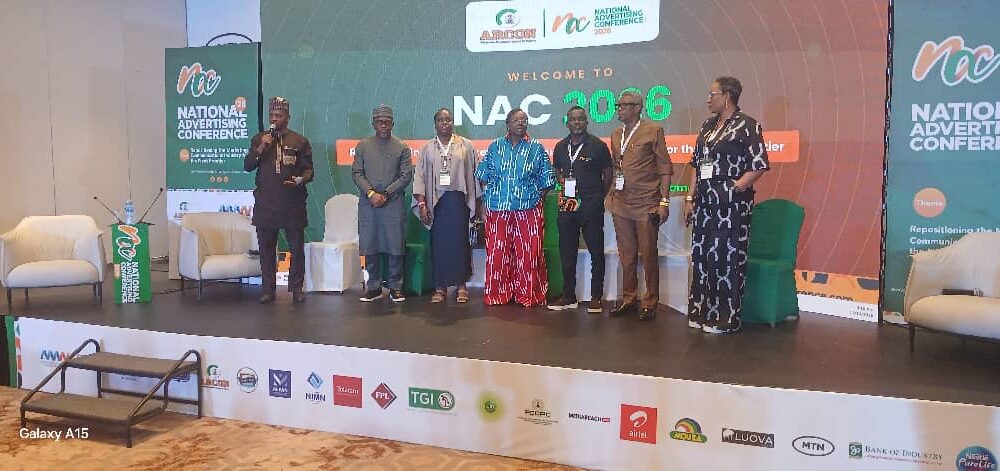


The National Advertising Conference entered its most intensive and pivotal phase on Friday, drawing hundreds of marketing communications professionals, media executives, creatives, and policymakers. Centered around the forward-looking theme “Repositioning the Marketing Communications Industry for the Next Frontier,” Friday’s sessions served as a intellectual powerhouse, tackling the tectonic shifts transforming advertising, consumer behavior, and media ecosystems.
The day’s extensive lineup of plenary addresses, breakout tracks, and specialized workshops focused heavily on how practitioners can leverage emerging technologies, most notably Generative AI, while steadfastly preserving authentic human creativity, ethical standards, and cultural resonance.

A central focus of the general sessions was the rapid integration of artificial intelligence into creative workflows. Sessions such as “Beyond the Prompt: Balancing Generative AI Efficiency with Authentic Human Storytelling” addressed both the massive operational advantages and the potential pitfalls of automation.

Industry thought leaders emphasized that while AI tools offer unprecedented speed and scaling capabilities, they must serve strictly as co-pilots. Panellists and speakers, including notable academics such as Professor Abigail Ogwezzy-Ndisika, cautioned that true brand affinity and emotional connection rely fundamentally on human ingenuity, deep local insights, and original storytelling.
Consumer dynamics took center stage as panels dissected the media consumption patterns of younger demographics, paying close attention to how these shifts manifest within local markets.
Discussions surrounding Gen Z and Gen Alpha habits revealed that traditional, interruption-driven advertising formats are steadily losing ground. Instead, trust-based, peer-recommended, and interactive short-form video ecosystems now dictate where attention flows.
Complementing this, local market analyses led by insights from experts including Professor Uchenna Uzo of the Lagos Business School, highlighted how Nigerian consumers decide, trust, and purchase.
Speakers noted that community validation, perceived value, and localized context heavily outweigh generic, broad-brush messaging in today’s competitive landscape.
Friday’s specialized technical tracks focused on structural changes across media channels, addressing both technological modernization and the preservation of regional cultural integrity.
Sessions tracking broadcast digitization, featuring contributions from industry heavyweights such as Charles Ebuebu, Director-General of the National Broadcasting Commission (NBC), and Yinka Adebayo of Mediareach OMD, emphasized that transitioning fully from basic reach metrics to hard accountability requires rigorous, independent audience measurement and uncompromised data transparency.
In parallel, regional and cultural sessions, including a compelling presentation by Professor Sule Ya’u Sule of Bayero University, Kano, addressed advertising copy tailored to Northern Nigeria. Speakers warned against “cultural bastardization” and clumsy literal translations, advocating instead for culturally fluent, respectful, and contextually aware messaging that honors regional heritage.
Addressing the human capital driving the sector, panels focused on talent pipeline management highlighted the urgent need for continuous upskilling, mentorship, and structural retention frameworks. Human capital experts from organizations like Brandeye and MPXM noted that safeguarding the future of the industry requires robust training systems that empower the next generation of creative and strategic leaders.