

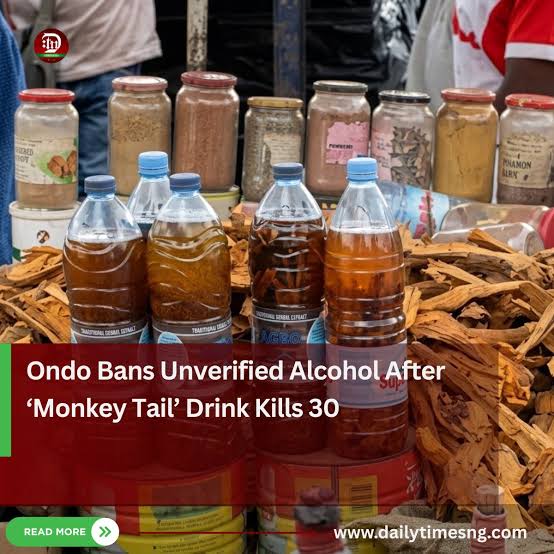



The persistence of informal economies in developing nations often brings severe public health vulnerabilities, particularly when unregulated production intersects with daily social life. A devastating illustration of this crisis emerged in southwestern Nigeria’s Ondo State in September 2026, when a widespread outbreak of suspected alcohol poisoning resulted in at least 49 deaths and the hospitalization of 182 individuals.

Centered in the Odigbo district, the tragedy underscores the lethal risks posed by unmonitored home-brewed spirits, the severe physiological mechanics of methanol toxicity, and the complex socioeconomic factors that drive communities toward high-risk consumption

The disaster originated during two traditional social gatherings in Odigbo, where guests consumed a popular local gin commonly known as “Monkey Tail.” First reported on September 5, 2026, the outbreak initially claimed 29 lives within its first week before the casualty rate escalated sharply.
As Ondo State Health Commissioner Dr. Banji Ajaka reported, the epidemiological profile of the victims strongly pointed toward acute toxic exposure. Affected individuals presented with a consistent, rapid onset of severe symptoms, including intense headaches, generalized body pain, respiratory distress, altered states of consciousness, and sudden blindness.
Clinically, such rapid multi-organ collapse, characterized by renal failure, neurological damage, and optic nerve destruction, is a classic hallmark of methanol poisoning, which occurs when improperly distilled or deliberately adulterated spirits introduce high concentrations of toxic industrial alcohols into the bloodstream.
Beyond its immediate medical toll, the Ondo State crisis highlights the deep-seated economic drivers that sustain the market for illicit liquor across parts of Nigeria. Locally brewed concoctions like “Monkey Tail” remain widely popular primarily because they are cheap, potent, and readily accessible compared to regulated, commercially manufactured alternatives.
In informal settings, traditional brewing techniques frequently lack temperature controls, quality assurance, and legal oversight, leaving batches susceptible to dangerous levels of methanol byproduct or direct contamination by unscrupulous vendors seeking to boost volume.
The public health response to such outbreaks requires a dual strategy of medical containment and criminal justice intervention. While state health authorities worked to manage hospitalized patients and confirm chemical exposure through laboratory analysis, law enforcement agencies initiated criminal investigations, resulting in the arrest of a key suspect tied to the distribution of the contaminated batch.
However, as this tragedy demonstrates, punitive enforcement alone is insufficient to address the systemic challenge. Mitigating the recurring threat of toxic artisanal alcohol demands stronger community-level regulatory frameworks, public education on the signs of adulterated spirits, and economic policy interventions that reduce the reliance of vulnerable populations on unvetted informal markets.