



Nigeria’s food inflation rate surged by 2.79 percentage points to reach 20.31 percent in July 2026, up from 17.52 percent in June, marking the fifth consecutive monthly increase since March.

According to the latest Consumer Price Index (CPI) report released by the National Bureau of Statistics (NBS), this development marks the first time the country’s food inflation rate has breached the 20 percent benchmark since February 2021.

On a month-on-month basis, food inflation climbed to 5.56 percent in July—a notable increase of 1.82 percentage points compared to the 3.75 percent recorded in June.
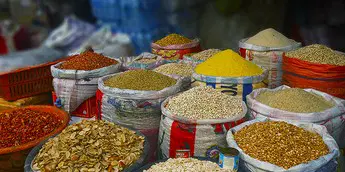
The statistical agency attributed the persistent rise in food costs to steep price increases across essential staples, including rice, tomatoes, pepper, onions, crayfish, garri, beef, eggs, plantain, and water yam.
Regional analysis from the report highlighted significant geographic disparities in food costs:
Highest Year-on-Year Food Inflation:
Adamawa (51.36%), Katsina (30.84%), and Zamfara (30.65%).
Lowest Year-on-Year Food Inflation: Borno (-0.31%), Nasarawa (6.88%), and Kebbi (12.50%).
Highest Month-on-Month Acceleration:
Adamawa (17.02%), Lagos (13.48%), and Borno (13.26%).
Lowest Month-on-Month Acceleration:
Jigawa (-3.68%), Kebbi (-3.67%), and Bauchi (-1.85%).
Despite the sharp rise in food prices, the headline inflation rate eased for the second consecutive month, dropping by 0.48 percentage points to 15.43 percent in July from 15.91 percent in June. The NBS noted that this overall deceleration was largely driven by a slowdown in core inflation, which moderated to 14.97 percent in July from 15.92 percent in the previous month.