


By Godwin Anyebe

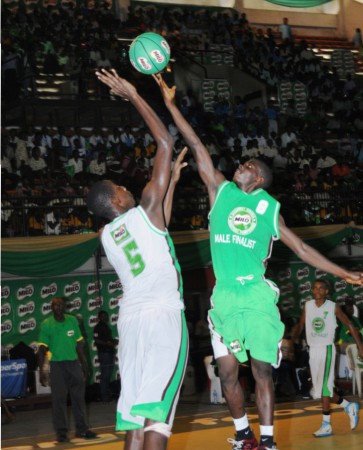
For more than a quarter-century, while the structural landscape of Nigerian youth sports weathered systemic challenges, fluctuating budgets, and administrative shifts, one hardwood court remained unshakeable. Since 1999, Nestlé Nigeria Plc has consistently lit up the indoor sports halls of the nation, breathing life, grit, and opportunity into millions of young lives through the MILO Basketball Championship (MBC).

What began at the tail end of the twentieth century as a modest inter-school tournament involving fewer than 500 schools has ballooned into a national institutional movement. Today, as the 2026 edition rolls into its regional conference apex, the championship commands the participation of over 13,000 schools across all 36 states and the Federal Capital Territory (FCT), directly engaging more than 350,000 student-athletes annually.
This is not merely a corporate social responsibility (CSR) checklist item; it is a masterclass in grassroots development and a major engine room for socio-economic transformation and global talent export.
A Legacy Born in 1999
To understand the sheer magnitude of the MILO Basketball Championship, one must return to its maiden edition in 1999. Prior to this intervention, secondary school sports in Nigeria were largely localized, fragmented, and devoid of the corporate sponsorship required to scale talent from raw potential to elite performance.
Recognizing this vacuum, Nestlé Nigeria stepped onto the court. Partnering initially with the National Collegiate Sports Foundation (NCSF) under the leadership of the late Mr. Remi Olowude, and later institutionalizing the relationship with the Nigeria School Sport Federation (NSSF) in 2000, Nestlé designed a tournament explicitly engineered to intertwine sports with formal education.
The maiden edition culminated in a fiercely contested national final at the Indoor Sports Hall of the National Stadium, Surulere, Lagos. In that historic 1999 encounter, International School Lagos (ISL) and Government Secondary School, Minna, etched their names into folklore as the pioneer powerhouses of the championship. At the closing ceremony of that inaugural tournament, the vision was set in stone.
Addressing the gathered student-athletes, media, and school principals, the representatives of Nestlé Nigeria proclaimed: “We are setting in motion a platform that does not merely look to crown champions of a game, but to build champions for life. Through the discipline of the court, the resilience required to rebound from loss, and the shared reliance of teamwork, we are partnering with Nigerian schools to feed the values that will format the leaders of tomorrow.”
This foundational philosophy has remained unchanged. The tournament was structured purposefully through a decentralized model. By dividing the country into strategic zones, the Savannah Conference, Central Conference, Atlantic Conference, and Western Conference, Nestlé ensured that a child in a public school in rural Taraba or a deep-valley community in Benue enjoyed the exact same visibility, uniform quality, and technical officiating as a student in a metropolitan school in Lagos.
Nourishing Beyond Nutrition
At its technical core, the objective of the MILO Basketball Championship is twofold: character formation and grassroots athletic discovery. Nestlé Nigeria recognized that the classroom provides intellectual infrastructure, but sports provide the behavioral architecture necessary for complete human development.
The tournament aims to instill “grit”, the psychological resilience to persist through adversity, alongside teamwork, respect, and fair play. This alignment perfectly mirrors the MILO brand essence: providing the nutritious energy that fuels physical ambition and mental fortitude.
Furthermore, the championship targets inclusivity. In a sports culture where female athletics historically received secondary attention, the MBC enforces absolute gender parity. From 1999 to 2026, every conference and national finale has featured separate, equally funded, and equally celebrated categories for boys and girls. In recent years, Nestlé has expanded this scope to include special exhibition matches for children with special abilities, ensuring that no demographic is left on the sidelines.
26 Years of Unbroken Consistency
In the corporate world, programs are frequently birthed with fanfare only to evaporate when economic tides turn or executive leadership shifts. Nestlé Nigeria’s 26-year unbroken streak with the MBC is an anomaly that commands deep analytical respect. Through economic recessions, currency transitions, global health crises, and hyperinflationary pressures, Nestlé has never skipped a season.
Reflecting on this journey during the opening of the 26th edition at the Sanni Abacha Indoor Sports Hall in Kano, Mr. Opeyemi Jaiyeola, Category Development Manager, speaking on behalf of Nestlé’s Category Manager, Mr. Gilbert Tweneboah-Koduah, captured the milestone beautifully:
”Since 1999, what started with fewer than 500 schools has grown into a national movement, now engaging over 12,000 schools annually. This growth is not by chance. It’s a result of dedication, consistency, and the belief that every child deserves the opportunity to discover their strength and reach their full potential.”
This steadfastness has systematically transformed Nigeria’s basketball ecosystem. Beyond organizing the games, Nestlé’s financial commitments have leaked into infrastructural development. A notable example is the donation of the international-grade portable wooden sports flooring at the National Stadium in Lagos to the Nigeria Basketball Federation (NBBF), a direct fallout of the MILO championship infrastructure pipeline.
Winners Through the Decades
The court does not lie, and over 26 years, the MILO Basketball Championship has cataloged an elite registry of institutional winners. Schools have built multi-generational dynasties on the back of Nestlé’s sponsorship.
International School Lagos (ISL): The dominant force of the early 2000s, producing teams that swept the Western Conference and secured multiple national titles. Government Secondary School, Minna (Niger State): A legendary basketball incubator that consistently dominated the Central and northern play-offs.
St. Jude’s Girls Secondary School, Amarata (Bayelsa State): Renowned for their terrifyingly disciplined run in the female category, capturing consecutive national crowns in the 2010s. Father O’Connell Science College, Minna (Niger State): The reigning titans of the modern era, clinching their third historic national title during the Silver Jubilee edition in late 2025 with a breathtaking 66–64 victory over Bishop Dimeari Grammar School, Bayelsa State.
Government Secondary School, Karu (FCT, Abuja): The female Cinderella story of the 25th edition, breaking a three-year runner-up curse to defeat Lanreleke Sports Academy, Osun State, 55–42 to claim their first-ever national crown.
The 2026 Landscape: The Central Conference Battle
The current 26th edition continues this tradition of elite competition. Just recently, at the Central Conference regional finals, Government Secondary School (GSS), Gboko, Benue State (Girls) and Father O’Connell Science College, Niger State (Boys) bulldozed their way to the regional championships, punching their tickets to the National Finals slated for Lagos on July 2, 2026.
The individual brilliance of tournament MVPs like Friday Victoria Ada (GSS Gboko), who dropped 25 points in the regional final, and Idris Mohamed (Father O’Connell Science College), who contributed 20 points, proves that the pipeline is still overflowing with world-class talent.
Alignment with National Policy and the Mechanics of Skill Export
What Nestlé Nigeria has constructed with the MBC is a perfect private-sector implementation of the National Sports Industry Policy (NSIP) driven by the Federal Ministry of Youth and Sports Development. The ministry’s core pillars emphasize grassroots mobilization, infrastructure development, and turning sports from mere recreation into a viable business sector.
Nestlé seamlessly aligns with this vision by acting as the primary scout and financier at the foundational tier, secondary schools, where state funding is often thinnest.
Value of the Sports Export Model
When we look globally, nations like Brazil, France, and Serbia do not view sports simply as entertainment; they view them as a highly lucrative economic export sector. Brazil exports thousands of football players annually, whose overseas remittances inject hundreds of millions of dollars back into the local economy, boosting foreign exchange reserves and household consumption.
Similarly, the Balkan nations have turned basketball into a primary human-capital export to the EuroLeague and the NBA.
Nestlé Nigeria has positioned itself as the premier vehicle for this exact talent and skill export model. The MILO Basketball Championship has served as the launchpad for players who received secondary school exposure, caught the eyes of international scouts, and secured collegiate scholarships in the United States and Europe. Many have transitioned directly into the Nigerian National Teams (D’Tigers and D’Tigresses), professional leagues in Europe, and the NBA.
When a Nigerian athlete, discovered at a MILO regional tournament, signs a professional contract abroad, the economic returns are cyclical: Foreign Exchange Inflows: Through direct diaspora remittances back to families and local investments.
Job Creation: Funding local academies, hiring local trainers, and building private court infrastructure. National Brand Equity: Elevating Nigeria’s global reputation, which indirectly stimulates foreign direct investment (FDI) in sports tourism and apparel manufacturing.
By investing in the youth demographic today, Nestlé is actively creating a generation of high-earning global citizens whose financial and cultural feedback loops directly expand Nigeria’s Gross Domestic Product (GDP).
A Partnership in Words and Action
The critical nature of this tournament has consistently drawn the attention and participation of high-ranking state and federal officials who recognize that Nestlé is doing the heavy lifting of social engineering.
During the national finals of a previous milestone edition, the Executive Governor of Lagos State stepped onto the court to acknowledge this corporate sacrifice. Addressing the packed arena, the Governor stated: “What Nestlé Nigeria Plc is doing here year after year transcends corporate marketing. They are saving lives. By keeping thousands of our teenagers away from social vices, drug abuse, and street crime, and funneling that explosive youthful energy into sportsmanship, Nestlé is writing a socio-developmental manual that the government deeply respects. We pledge our unalloyed inter-ministerial support to ensure this court remains open forever.”
This public validation underscores the reality that the MBC is viewed by policymakers as a critical partner in national security and youth stabilization.
Blueprints for Multnationals.
The overarching question for the Nigerian corporate ecosystem remains: Why stands Nestlé alone in this scale of consistency?
Too many multinational corporations operating within the telecommunications, oil and gas, FMCG, and banking sectors treat sports development as an episodic marketing stunt. They sponsor a high-profile, one-off celebrity match or a short-lived reality tournament, only to pull out when quarterly profits fluctuate.
This erratic approach damages the sports ecosystem because talent development requires institutional continuity; a child who is 12 years old today needs to know that the tournament will still exist when they turn 16. To build a sustainable national framework for grassroots sports development, other multinationals must borrow the Nestlé Blueprint:
As the Central and Savannah conferences hand over the baton to the Atlantic and Western conferences on the road to the National Finals in Lagos on July 2, 2026, the legacy of the MILO Basketball Championship stands fully vindicated. Nestlé Nigeria has proven that with corporate intentionality, consistency, and a deep love for human development, a private entity can single-handedly anchor a critical sector of a nation’s youth development strategy.
The whistles will blow, the sneakers will squeak against the hardwood, and new regional MVPs will rise. But long after the final buzzer sounds and the lights in the stadium are turned off, the real victory remains active across the fabric of Nigerian society: a generation of disciplined, resilient, and empowered citizens who learned, on the courts of MILO, how to dunk their dreams and conquer the world.