

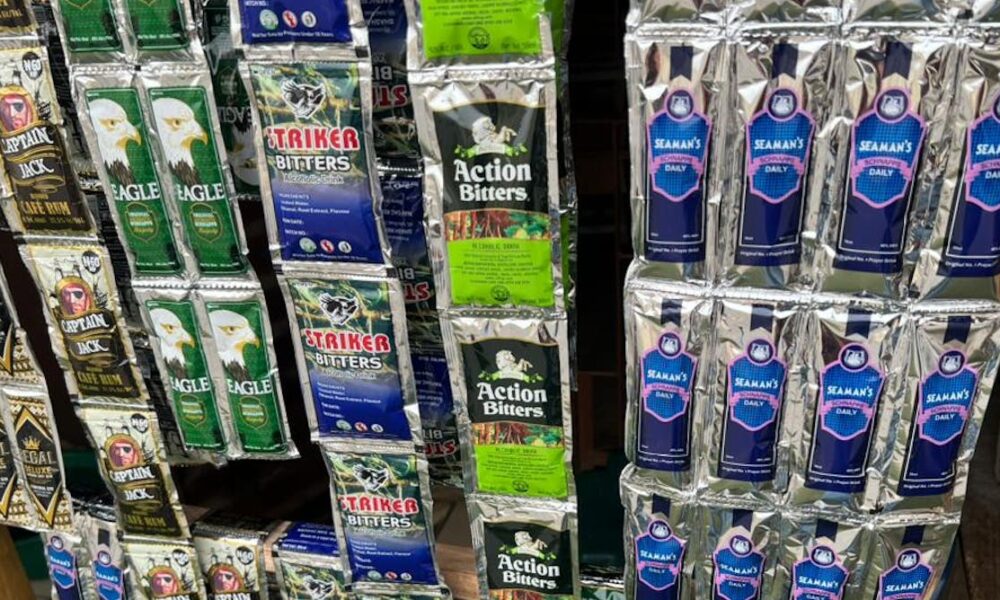




The lines are drawn, the deadlines have passed, and the stakes could not be higher. As the National Agency for Food and Drug Administration and Control (NAFDAC) begins the full enforcement of the ban on alcoholic beverages in sachets and PET bottles under 200ml, Nigeria finds itself at a crossroads.

On one side stands the non-negotiable duty of the state to protect its most vulnerable citizens; on the other lies the cold, hard reality of an economy struggling to keep its manufacturing engines humming.

To answer the fundamental question of priority: Public health must come first. However, the economic fallout cannot be dismissed as “imaginary” rhetoric. A responsible regulatory framework must protect the child without needlessly strangling the employer.
NAFDAC’s argument, supported by the Renevlyn Development Initiative (RDI) and various public health advocates, is rooted in a sobering reality. Sachet alcohol is the “entry point” for underage drinking. Its portability, ease of concealment, and, most importantly, its pocket-money pricing make it dangerously accessible to school-aged children.
We are not merely discussing “lifestyle choices” here; we are discussing the physiological devastation of early-onset alcohol dependency. The science is settled: early exposure to high-concentration spirits stunts brain development and fuels a cycle of poverty and mental health crises.
When a product’s primary “advantage” is that it is cheap enough for a child to buy and small enough for a student to hide in a pocket, the regulator has a moral obligation to step in. The 2018 agreement was not a sudden ambush; it was a five-year window for transition that the industry, perhaps hoping for a perpetual reprieve, failed to fully utilize.
Conversely, we cannot ignore the alarms raised by the Manufacturers Association of Nigeria (MAN) and the Distillers and Blenders Association of Nigeria. Nigeria’s manufacturing sector is already gasping for air amidst high energy costs, currency volatility, and dwindling consumer purchasing power.
The industry argues that billions of Naira in investments in specialized packaging machinery are now effectively stranded assets. More pressing is the human cost: the Food, Beverage and Tobacco Senior Staff Association (FOBTOB) warns of massive job losses. In a country with double-digit unemployment, every shuttered factory line represents hundreds of families pushed into hardship. To dismiss these concerns as mere “profit over health” is a simplification that ignores the complexity of Nigeria’s industrial ecosystem.
The current deadlock suggests a failure of the “phasing out” period. If the industry argues it is not ready after five years, NAFDAC is right to ask: If not now, when? Continuous extensions create a culture of regulatory impunity.
However, enforcement should not be a scorched-earth policy. The government must consider:
Targeted Re-tooling Support: Providing fiscal incentives or low-interest credit lines for manufacturers to transition their production lines to larger, glass-bottle formats that are less accessible to minors.
Stricter Point-of-Sale Regulation: While the sachet ban is a “supply-side” fix, the “demand-side” requires more than just a ban. We need a massive overhaul of how liquor licenses are issued to kiosks and street vendors.
Social Safety Nets: For the workers displaced by this policy, there must be a clear pathway for re-skilling or transition within the broader food and beverage sector.
NAFDAC is right to remain undeterred. A nation that sacrifices the health of its youth on the altar of industrial turnover is a nation with no future to manufacture for. But as the agency mops up these products from the shelves, the Ministry of Industry and the Ministry of Labour must step into the gap to ensure that the “bold life-saving action” of today does not become the economic funeral of tomorrow.
The ban must stay, but the dialogue on how to save the industry, without compromising our children, must continue with renewed honesty.
Godwin Anyebe is a Journalist and a Rights Activist.