

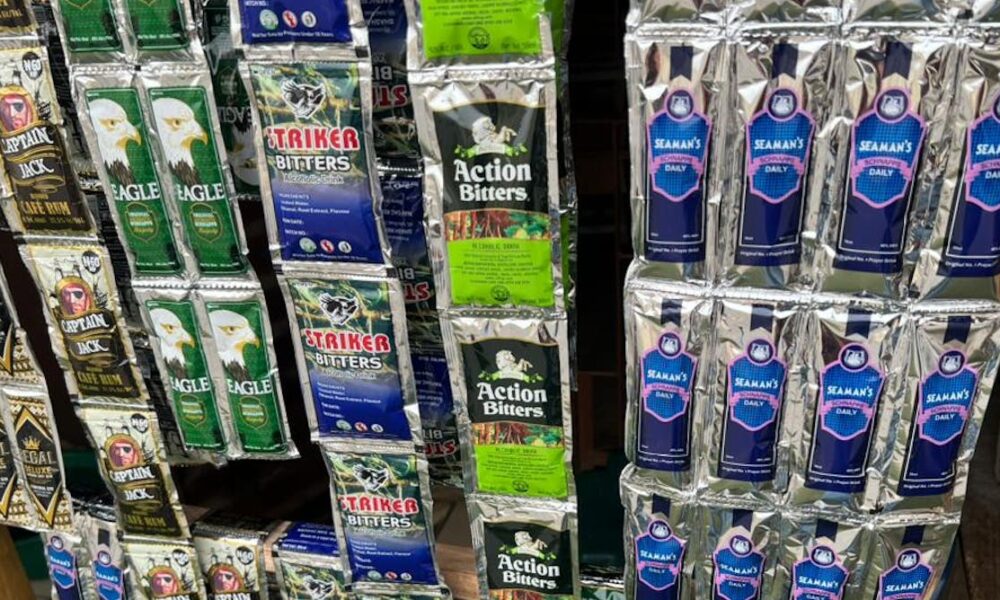




As 2026 unfolds, the air in Nigeria’s industrial sector is thick with tension. The long-standing battle over the ban of alcoholic beverages in sachets and small PET bottles (below 200ml) has reached a fever pitch. On one side stands NAFDAC, armed with a mandate to protect the youth; on the other, the Manufacturers Association of Nigeria (MAN), defending an industry that supports millions of livelihoods.

The Director-General of NAFDAC, Prof. Mojisola Adeyeye, has remained resolute. The agency’s stance is rooted in a 2018 agreement intended to phase out these products by early 2024, a deadline that was eventually pushed to December 2025. As we move into 2026, NAFDAC has begun full-scale enforcement, citing the ease with which minors can hide these small “pocket” drinks from parents and teachers.
”This ban is not punitive; it is protective,” Prof. Adeyeye reaffirmed in a recent dispatch. “The proliferation of high-alcohol-content beverages in sachets has made such products easily accessible and affordable to vulnerable populations, particularly children and commercial drivers.”
However, the enforcement has been met with a wall of resistance from the Organized Private Sector (OPS). Segun Ajayi-Kadir, the Director-General of MAN, has emerged as the vocal champion for the manufacturers.
He argues that NAFDAC is acting in “flagrant disobedience” of directives from the Office of the Secretary to the Government of the Federation (OSGF) and resolutions from the House of Representatives, both of which called for a suspension of the ban pending further consultation.
”This unnecessary action is detrimental to the survival of indigenous industrial operators,” Ajayi-Kadir warned. “It comes at the expense of jobs and will open the market for illicit, sub-standard, and unregulated products.”
The stakes are higher than just the price of a drink. The Distillers and Blenders Association of Nigeria (DIBAN) estimates that the sachet alcohol segment represents a multi-billion naira investment. A total ban, they argue, would lead to the immediate closure of dozens of factories and the loss of over 500,000 direct and indirect jobs.
For manufacturers, the sachet was never about targeting children; it was about “poverty-sized” packaging. In an economy where inflation has eroded purchasing power, the sachet allowed low-income adults to exercise their right to choice without breaking the bank.
”If you ban the regulated sachet, the man in the village won’t stop drinking,” says Emeka Ibe, a medium-scale distillery owner in Ogun State. “He will simply turn to ogogoro brewed in a backyard with no hygiene standards. We are regulated. We pay taxes. NAFDAC is effectively handing our market share to criminals.”
Public opinion is sharply divided. Mrs. Toyin Adebanjo, a secondary school teacher in Ibadan, welcomes the ban with open arms. “I have caught students with these sachets in their socks. Because they are small and odorless when mixed with soft drinks, it’s hard to detect. We are losing a generation to early-onset alcoholism.”
Conversely, consumers like Friday Akpan, a vulcanizer, see the ban as an attack on the poor. “The big men drink Hennessy in big bottles. We drink our sachet. Why is NAFDAC only looking at our own? If they want to stop kids from drinking, they should arrest the sellers, not close the factory.”
Nigeria is not alone in this struggle, but its approach is increasingly divergent from global trends. For instance, in countries like the Philippines, “tingi” culture (selling in small portions) is prevalent. While there are regulations on alcohol advertising, small sachets and bottles remain a staple for the lower-income demographic.
In addition, most EU countries have strict minimum pricing laws and high excise duties rather than outright packaging bans. The focus is on making alcohol expensive enough to deter minors, rather than changing the size of the container.
Also, Kenya and Uganda have previously attempted bans on sachet alcohol. Kenya’s 2017 ban was largely successful in reducing visibility but led to a spike in the consumption of “moonshine,” which caused several mass-poisoning incidents.
In many “climes,” the consensus is moving toward Minimum Unit Pricing (MUP) and Strict Age Verification at the point of sale, rather than banning the packaging format itself.
The central question remains: How can Nigeria prevent underage drinking without bankrupting its indigenous manufacturers? Experts suggest a three-pronged approach that moves away from a total ban toward “smart regulation.”
Digital Age Verification & “Mystery Shopping”
Instead of banning the sachet, the government could mandate that all alcohol retailers (including kiosks) must be licensed. The FCCPC and NAFDAC could employ “mystery shoppers”, adults who look young, to attempt purchases. Heavy fines or permanent closure for any vendor caught selling to a minor would create a self-policing ecosystem.
Enhanced Taxation on Small Volumes
Rather than a ban, a specific “social health tax” could be applied to volumes below 200ml. This would slightly increase the price, making it less “pocket-money friendly” for school children, while still keeping it within reach for adult laborers. This preserves the industry’s income while using the extra tax revenue to fund rehabilitation and school awareness programs.
Strict Packaging Redesign
The “innovation” MAN speaks of could go further. Regulations could mandate that sachet alcohol must carry bold, graphic health warnings covering 50% of the pack, similar to cigarette packaging. Additionally, removing “fruity” flavors from sachet spirits would make them less appealing to the younger palate.
The “One-Billion Naira” Commitment
As Ajayi-Kadir noted, the industry has already spent over a billion naira on responsible drinking campaigns. The government should formalize this, requiring manufacturers to contribute a percentage of their profit into a federally managed “Alcohol Education Fund” to ensure these campaigns reach every rural primary school.
As the deadline passes and enforcement intensifies, the Nigerian economy stands at a crossroads. The “health vs. wealth” debate is a false dichotomy; a nation needs both a healthy workforce and a thriving industrial sector.
The OSGF’s call for further consultation remains the most logical path. A total ban risks creating a vacuum that “moonshine” distillers will happily fill with toxic alternatives. By focusing on where and to whom alcohol is sold, rather than how it is packaged, NAFDAC can achieve its noble goal of protecting children without turning the lights off on Nigeria’s manufacturing heart.
For now, the silver sachets remain on the shelves, but their future, and the future of the men and women who make them, hangs in a delicate balance.