
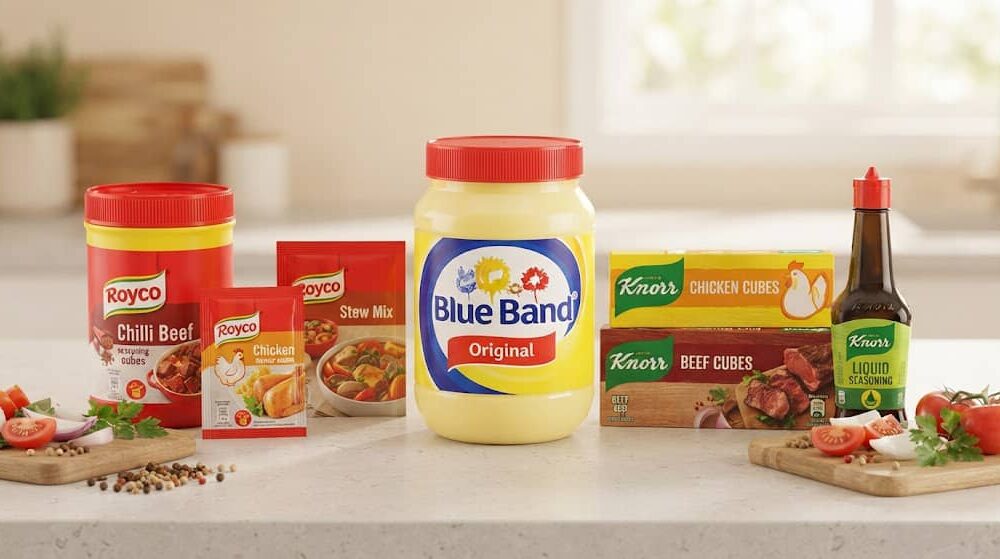




When news broke that Unilever Nigeria Plc had recommended transferring its foods business to MCK Nigeria Ltd, a subsidiary of American flavour and spice giant McCormick & Company Inc., sensational headlines quickly stirred anxiety across Nigerian households.

To the casual reader, a multinational exiting its food division sounds like an imminent disappearance of beloved kitchen staples. Yet from a consumer protection and brand continuity standpoint, Nigerians are not losing Knorr, Royco, or Blue Band; rather, they are witnessing a standard corporate restructuring that preserves product availability while shifting ownership behind the scenes.

First, it is critical to distinguish between a product discontinuation and a corporate divestment. When a company discontinues a product, manufacturing stops and the item vanishes from retail shelves. By contrast, Unilever Nigeria’s proposed transaction, part of a broader global combination between parent company Unilever Plc and McCormick, is an asset transfer.
McCormick is not acquiring Unilever’s foods portfolio to shut down factories or retire household names; it is investing specifically to acquire, manage, and expand profitable, deeply entrenched seasoning brands like Knorr and Royco. For everyday shoppers, the cubes and seasoning powders used in daily cooking will remain on market stalls and supermarket shelves, backed by a global specialist whose core business is spices and flavourings.
Second, the inclusion of Blue Band in alarming social media narratives reflects a widespread misunderstanding of corporate history. Unilever divested its global spreads division, including Blue Band, back in 2018 to investment firm KKR, creating Upfield (now known as Flora Food Group).
For eight years, Blue Band has operated independently of Unilever’s corporate balance sheet. Consumers have continued buying Blue Band uninterrupted through multiple corporate transitions, proving that a change in parent-company ownership rarely disrupts a strong, trusted consumer brand.
Nevertheless, while consumers are not losing these brands, vigilance remains essential during corporate handovers. Transitions in ownership often trigger speculative hoarding, artificial price hikes by middlemen, or an influx of opportunistic counterfeiters exploiting public confusion.
Regulators such as the Federal Competition and Consumer Protection Commission (FCCPC) and NAFDAC, alongside McCormick’s incoming local management, must ensure seamless supply-chain continuity, maintain established formulation standards, and communicate clearly so Nigerian consumers are neither misled nor shortchanged.