





By Kennedy Elaigwu Awodi

In the historical narrative of developing nations, tertiary education is rarely just a sector; it is the vital engine of national destiny. For decades, Nigeria’s public university and polytechnic system laboured under a heavy shadow, plagued by crumbling infrastructure, inadequate laboratory capacity, chronic brain drain, and systemic funding shortfalls.

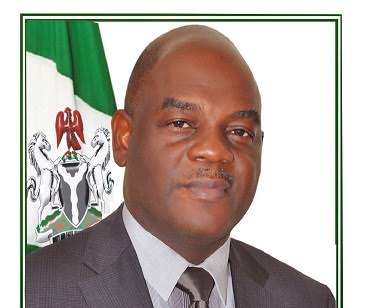
Yet, an unmistakable transformation is quietly rewriting this narrative across campuses from Azare to Enugu, Lapai to Owo. At the epicenter of this renaissance stands the Executive Secretary of the Tertiary Education Trust Fund (TETFund), whose strategic stewardship, operational transparency, and forward-looking vision are recalibrating the trajectory of Nigerian higher education.
To understand the magnitude of TETFund’s current impact, one must evaluate not merely the volume of resources deployed, but the precision with which those resources are targeted. Under the current leadership, TETFund has transcended the role of a passive funding agency to become a dynamic catalyst for institutional modernization.
Walk onto the campus of the Federal University of Health Sciences in Azare, Bauchi State, and the change is tangible. The recent commissioning of 13 state-of-the-art academic and residential facilities at FUHSA represents a direct, decisive intervention in one of Nigeria’s most critical vulnerability areas: medical training capacity and healthcare manpower.
While the nation confronts an urgent loss of medical professionals to foreign markets, TETFund’s strategic investments are building the domestic infrastructure required to train, retain, and empower the next generation of Nigerian healthcare leaders.
This pattern of high-impact intervention is consistently mirrored across the country’s geopolitical zones. At the Institute of Management and Technology (IMT) in Enugu, five landmark projects valued at over ₦1.06 billion were inaugurated to modernize technological infrastructure. At Ibrahim Badamasi Babangida University (IBBU) in Lapai, Niger State, major projects exceeding ₦4.08 billion, including a flagship Faculty of Law complex and a remodeled Senate Building, have transformed the academic landscape. Meanwhile, at Rufus Giwa Polytechnic in Owo, Ondo State, iconic structures worth ₦1.72 billion were unveiled as part of an intervention commitment surpassing ₦8 billion.
These are not isolated achievements or mere statistical line items. They reflect an executive leadership deeply committed to equity, accountability, and geographic inclusivity. Under this administration, TETFund has ensured that every region, state, and qualifying public institution feels the direct impact of national development interventions.
By raising baseline allocations, the Executive Secretary has given institutional leaders, Vice-Chancellors, Rectors, and Provosts, the predictability and financial backing necessary to execute long-term strategic plans.
Perhaps the most defining aspect of the Executive Secretary’s leadership is an acute awareness of global shift. Physical brick-and-mortar development, while essential, is insufficient in an era defined by artificial intelligence, automation, and knowledge economies.
Recognizing this reality, TETFund has spearheaded groundbreaking initiatives to bridge the technological gap. The establishment of six specialized Artificial Intelligence and Robotics Centers across selected Nigerian universities marks a decisive departure from legacy funding models. Furthermore, the inauguration of a national committee dedicated to establishing multipurpose research laboratories and reforming engineering education ensures that Nigerian graduates are prepared to compete in global technical ecosystems.
Through the expanded National Research Fund (NRF), TETFund is driving high-impact, multidisciplinary research focused on solving Nigeria’s immediate economic and societal challenges. Crucially, the Executive Secretary has broken down historical institutional silos by forging strategic partnerships beyond the academic community.
To safeguard academic communities and foster domestic innovation, TETFund has forged strategic partnerships with the Nigerian Army and the Chief of Air Staff to fund advanced research, aerospace development, and emerging security technologies, while simultaneously collaborating with the Nigeria Security and Civil Defence Corps (NSCDC) to establish robust security frameworks that guarantee safe learning environments nationwide.
To bridge the gap between academia and the real economy, TETFund has forged a strategic partnership with the Nigerian Association of Chambers of Commerce, Industry, Mines, and Agriculture (NACCIMA). This collaboration directly aligns university research outputs with pressing industry demands, creating seamless pathways for academic innovation to transition from the laboratory into commercial markets.
Simultaneously, the Executive Secretary recognizes that sustainable vision relies entirely on unwavering accountability to maintain public trust. By instituting National Town Hall Meetings in Abuja, assembling university heads, union leaders, civil society organizations, and policy experts, TETFund has embedded fiscal transparency and open stakeholder dialogue into the core of its administrative framework.
Leading an agency of this scale requires a rare blend of administrative rigor, technical foresight, and patriotic conviction. The Executive Secretary of TETFund has demonstrated all three in abundance. By delivering infrastructure, championing frontier technologies, and placing accountability at the center of governance, TETFund is doing far more than building classrooms, it is building the future of Nigeria.
Kennedy Elaigwu Awodi wrote from North Carolina, USA.
Email: awodiken@outlook.com