
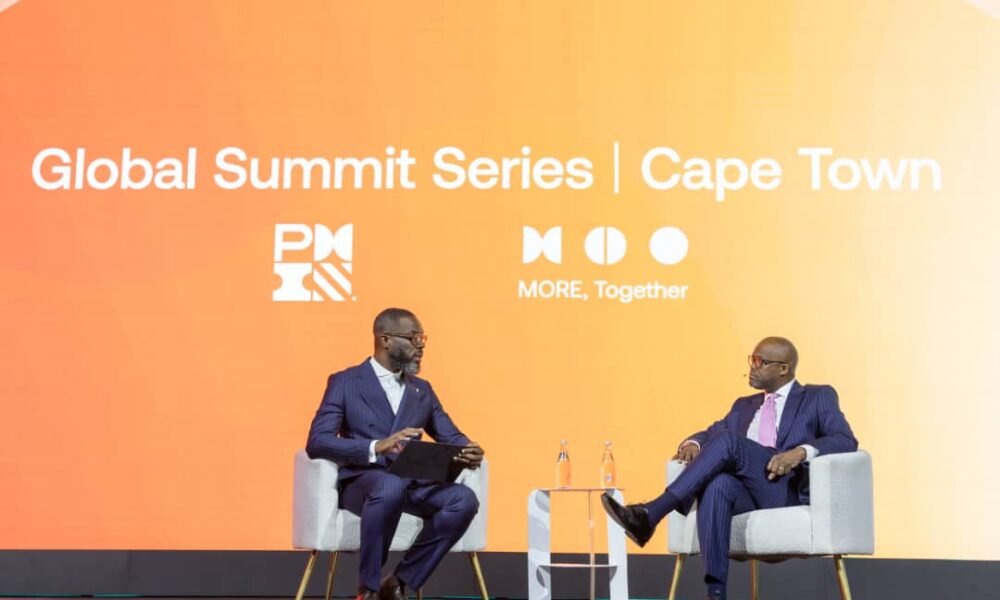




Africa must strengthen its capacity to deliver the payment systems, efficient borders and infrastructure that businesses need to benefit from the African Continental Free Trade Area (AfCFTA), H.E. Wamkele Mene, Secretary-General of the AfCFTA Secretariat, told project professionals at Project Management Institute’s Global Summit Series in Cape Town. In a fireside conversation with George Asamani, PMI’s Managing Director for Sub-Saharan Africa, Mene outlined the work needed to turn continental trade commitments into easier access to markets. Priorities include aligning national policies, modernising customs and enabling cross-border payments in local currencies.

Speaking under the summit theme Africa Delivers M.O.R.E. Together, he urged professionals across infrastructure, construction, agriculture, services and customs to consider how their expertise could help connect African economies.

“We all have a contribution to creating a single integrated market,” Mene said.
He illustrated the cost of fragmented markets through a transaction between businesses in Ghana and Kenya. Despite trading within Africa, the businesses may need to purchase a third currency, typically the US dollar, to complete payment. He estimated the associated currency conversion costs across the continent at approximately US$5 billion annually.
Mene pointed to the Pan-African Payment and Settlement System (PAPSS), developed by Afreximbank in collaboration with the AfCFTA Secretariat, as a practical response. The system enables cross-border payments in local currencies, reducing reliance on third currencies. The payments example showed why the mechanics of integration matter to businesses. The ability to trade across borders depends on the systems supporting each transaction, as well as the agreement itself. Reducing friction in those systems can help make access to a continental market commercially useful.
Making trade easier also requires customs authorities to apply agreed rules and governments to align domestic policies with continental commitments. Asamani connected those requirements to the skills needed to deliver programmes involving multiple institutions and countries.
“A continental agreement becomes meaningful when a business can use it,” said Asamani. “That depends on people who can coordinate institutions, manage risk, deliver reliable systems and keep the intended benefit in view. Project management provides the discipline to carry a policy commitment through to a service that businesses can use.”
Mene also addressed concerns about the impact of liberalisation on domestic industries. He explained that the agreement includes safeguards and that adjustment support can help sectors facing disruption as markets open.
“We have rules that protect infant industries in a country,” he said.
He emphasised the need to assess potential losses and support affected businesses, with domestic reform and continental cooperation working together to help firms compete in larger markets. Infrastructure remains central to that effort. Mene called for greater attention to project preparation and trade infrastructure, alongside digital investment. He highlighted the role of the Digital Trade Protocol in creating conditions for investment in emerging technologies and data centres.
That makes project preparation an important part of the integration agenda. Planning must account for how infrastructure will connect with customs processes, digital services and the institutions responsible for operating them. The value of each investment depends partly on whether these connections function effectively. For project professionals, the challenge extends beyond completing individual assets – payment platforms, transport connections and customs systems must work across institutional and national boundaries.
“Africa needs more project professionals equipped to deliver across these boundaries,” Asamani added. “Investing in their capabilities strengthens our ability to build infrastructure, implement digital systems and make public institutions more effective. It also gives African talent a greater role in delivering the projects that will shape the continent’s future.”
The discussion linked Africa’s talent development agenda to the practical demands of integration, with professionals helping institutions translate shared objectives into coordinated delivery across sectors and participating African countries.
For Mene, the ultimate test of AfCFTA is whether businesses can enter new markets at lower cost and with less administrative burden. Delivering those benefits will determine how effectively continental integration translates into commercial opportunity.