

By Godwin Anyebe

The early morning sun over Lagos reveals a familiar contrast. On one side, the sparkling, ambitious architecture of a rapidly expanding financial hub; on the other, the quiet, persistent crisis of clogging waterways and sprawling landfills. In a country of over 200 million people, plastic packaging is both a facilitator of daily survival and an ecological time bomb.

Millions of single-use sachets, PET bottles, and wrappers flow through the informal markets of Lagos, Kano, and Abuja every day. For decades, the narrative remained stagnant: plastic waste was an inevitable byproduct of consumer-driven progress, destined to end up in the sea, in the bellies of wildlife, or smoldering in street-side dumpsites.
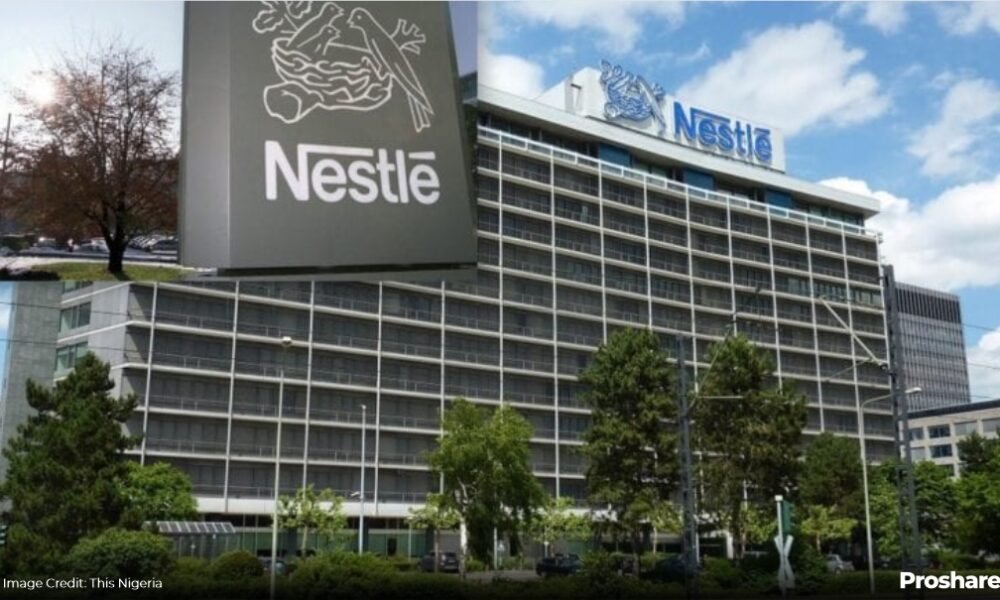
Yet, beneath the surface of this environmental crisis, a quiet but profound transformation has been taking root. Since 2019, food and beverage giant Nestlé Nigeria has been steering a massive, multi-sector effort to rewrite the country’s environmental script. What began seven years ago as isolated corporate social responsibility (CSR) clean-ups has evolved by 2026 into a sophisticated, systems-led circular economy.
By uniting competing industry rivals, grassroots recycling social enterprises, international diplomats, and federal regulators, Nestlé is spearheading a collaborative framework that treats plastic not as a threat, but as a precious, restorable resource.
The Scale of the Strides
To understand the magnitude of Nestlé Nigeria’s impact, one must look closely at the numbers. Between the launch of its initial partnerships in 2019 and the expansive milestones recorded in 2026, the brand has systematically scaled up its operations.
Over the last seven years, the volume of plastic diverted from landfills and natural ecosystems has crossed historic thresholds. Through core partnerships with the Food and Beverage Recycling Alliance (FBRA), Wecyclers, Chanja Datti, and Maladase Ecopreneur Management Ltd. (MECOM), Nestlé has successfully rerouted tens of thousands of tons of waste back into the manufacturing value chain.
The cumulative milestones of these initiatives tell a compelling story of environmental stewardship.
The Genesis of Change: The 2019 Pivot
The journey began in earnest on September 20, 2019. At its corporate headquarters in Lagos, Nestlé Nigeria signed a historic Memorandum of Understanding (MoU) with Wecyclers, a pioneer social enterprise focused on capturing value from household waste in low-income neighborhoods.
At the time, the ambitious goal of making 100% of Nestlé’s packaging reusable or recyclable was viewed by many cynics as corporate greenwashing. But those close to the project knew it was the start of something far deeper.
Mr. Mauricio Alarcon, the Managing Director and Chief Executive Officer of Nestlé Nigeria in 2019, laid down the company’s philosophical gauntlet during the MoU signing: “One of our ambitions at Nestlé is to strive for zero environmental impact in our operations as we strive towards a waste-free future. Tackling plastic pollution is an urgent priority which requires multisector collaboration, so this MoU with Wecyclers is another step towards achieving our shared objectives… We are engaging our people, our consumers, and business partners to play their part.”
By providing the critical capital needed to establish collection points across major Lagos communities, including Ajah, Ikeja, Mushin, Lagos Island, and Magodo, Nestlé enabled Wecyclers to create dozens of direct green jobs for collection point operators and sorters. Crucially, it gave thousands of subscribers a reliable income stream, turning discarded plastic from a nuisance into household revenue.
Olawale Adebiyi, the CEO of Wecyclers, reflected on the partnership’s early days as a game-changer for the local waste landscape: “This partnership with Nestlé has been an essential avenue to extend the plastics collection and recycling process by setting up more collection sites across Lagos. We are indeed pleased to partner with Nestlé to achieve our objectives of helping to create a plastics recycling ecosystem in Nigeria.”
The 2026 Paradigm Shift: The Rise of the Multi-Stakeholder Coalition
Fast forward to June 2026. Celebrating its seventh year of environmental stewardship, Nestlé Nigeria realized that while diverting over 60,000 metric tons of plastic was impressive, standalone interventions were no longer enough to match the pace of urbanization and plastic consumption.
To commemorate World Environment Day 2026, the multinational unveiled a groundbreaking multi-stakeholder coalition. This move marked a major transition from localized, awareness-heavy programs to a synchronized, systems-led national framework.
Instead of working in silos, Nestlé successfully brought together an unprecedented list of institutions under a single, action-oriented umbrella:
Government and Regulatory Authorities: The Federal Ministry of Environment, the National Environmental Standards and Regulations Enforcement Agency (NESREA), the Lagos State Ministry of Environment, and the Lagos State Waste Management Authority (LAWMA).
Advocacy & Industry Groups: The National Plastics Action Partnership (NPAP), the Food and Beverage Recycling Alliance (FBRA), the Circular Economy Innovation Partnership (CEIP), and the Recyclers Association of Nigeria (RAN).
Development & Diplomatic Partners: The Swiss Consulate and the Kingdom of the Netherlands, offering policy insights and international circular-economy models.
Execution and Media Engines: The African Clean-Up Initiative (acting as implementation lead) and News Central (serving as the strategic media partner).
The immediate action plan of this coalition was translated into a massive 12-location nationwide cleanup and sensitization campaign, stretching from Lagos and Abuja to Agbara, Jos, Kano, Enugu, Awka, Ota, Abaji, and Sagamu. In a single push, more than 400 volunteers took to the streets, recovering 4,556 kilograms of waste, rerouting recyclables straight to sorting hubs instead of landfills.
Speeches from the Frontlines: Advocacy and Vision
The launch of the 2026 coalition was defined by powerful, forward-thinking speeches that emphasized shared accountability over passive corporate responsibility. Lead, Corporate Communications, Corporate Affairs and Sustainability, Nestlé Nigeria Victoria
Uwadoka who has been the strategic heartbeat of Nestlé’s sustainability journey, spoke passionately about why the company is shifting its philosophy.
Her words: “Waste management outcomes improve when intervention shifts from awareness alone to shared accountability across the value chain. Poor waste management remains a major environmental challenge. This coalition is designed to connect policy, infrastructure, community action, and market-based recovery systems in a way that can deliver more durable environmental results.”
Uwadoka highlighted that environmental progress is only as strong as the communities driving it. “Environmental progress is most sustainable when communities see themselves as active participants rather than observers. What encouraged us most this year was not only the volume of waste recovered, but the willingness of volunteers, partners, and community members to work together towards a shared goal. Lasting environmental progress depends on that sense of collective ownership.”
Also, Controller, Lagos Field Office, Federal Ministry of Environment
Representing the Minister of Environment,
Mrs. Olabimpe Adenaike commended Nestlé’s proactive alignment with federal policies, hailing the initiative as a benchmark for public-private partnerships, noting that, the initiative reflects a strong commitment to environmental sustainability, community development, and responsible environmental practices. It aligns with the Ministry’s mandate to drive climate action and environmental safety.
We commend Nestlé Nigeria and its partners for advancing environmental awareness, waste reduction, and climate resilience through collaborative action. We encourage all Nigerians to support proper waste management, recycling, and sustainable living as we work together toward a cleaner, greener, and healthier nation.”
Representing the National Plastics Action Partnership (NPAP), Esther Chibueyin Fagbo underscored the economic and industrial significance of Nestlé’s ecosystem-building approach: “Nigeria’s plastic pollution challenge requires bold, collaborative action, and this initiative demonstrates the value of bringing together communities, partners, and the private sector around a shared goal. We are proud to have supported this effort and look forward to continuing our collaboration to advance circular economy solutions that create environmental and economic value.”
The Human Impact: Empowering Local Ecopreneurs
Behind the staggering figures of “tonnes of waste recovered” lie the human stories of ordinary Nigerians whose lives have been altered by Nestlé’s circular economy programs. Under the Plastic Advantage Program, Nestlé has empowered 43 waste aggregators with advanced training, infrastructure, and direct financial support. Many of these aggregators are women and youth who previously worked in the insecure, highly volatile informal waste sector.
Take, for example, the story of Amara, a waste aggregator operating in the crowded suburbs of Ota. Before entering the Plastic Advantage Program, Amara could only collect a few dozen kilograms of plastic a week, manually pushing a cart through muddy streets. Today, with Nestlé’s structural support, she runs an organized recovery yard, employing six local youths and supplying clean, baled PET bottles directly to heavy-duty recyclers.
”I used to think of plastic as garbage that made my neighborhood look bad,” Amara shares. “Now, I see it as currency. Nestlé didn’t just give us money; they taught us how to run a business, how to negotiate, and how to keep our environment clean. My kids are in school because of this waste.”
Moreover, the internal Employee Plastics Collection Scheme, active since 2022, has fostered a proud culture of sustainability from within. By collecting over 12,000 kilograms of plastic directly from their own homes and corporate spaces, Nestlé employees have closed the loop on their personal footprints, demonstrating that circularity is as much about internal cultural shift as it is about external PR.
The Blueprints for Nigeria’s Future
Nestlé Nigeria’s journey reveals a crucial lesson: corporate green credentials in the modern era cannot be bought with superficial donations or flashy billboards. They must be earned in the trenches of local communities, built through institutional partnerships, and backed by transparent, verifiable data.
As Nestlé steps deeper into its multi-stakeholder coalition model, the challenge shifts from proof of concept to long-term scalability. Nigeria’s structural waste management deficits, ranging from inadequate municipal collection trucks to inconsistent power grids for recycling plants, remain massive bottlenecks.
However, by building a decentralized, highly collaborative system that spans 12 key regions, Nestlé has provided a viable blueprint. They have proved that when corporate leadership, regulatory goodwill, and community incentive align, the transition from linear degradation to a thriving circular economy is not just a dream, it is already unfolding on the streets of Nigeria.