




The Lagos State Environmental Protection Agency (LASEPA), in a pioneering move to enforce verifiable climate accountability, has finalized the implementation framework for the Lagos Greenhouse Gas Registry (LGHGR).

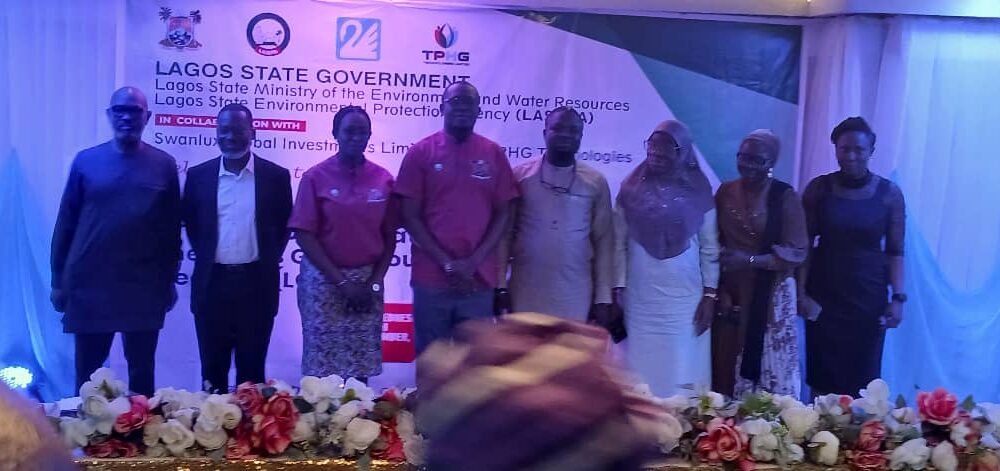
The initiative, developed in partnership with Swanux Global Investment Limited and TPHG Technologies Limited, was the central focus of the Second Stakeholders’ Engagement, which established the LGHGR as the state’s definitive tool for carbon management, public health protection, and economic competitiveness.

In his welcome address, the General Manager of LASEPA, Dr. Tunde Ajayi, set the tone for the engagement by emphasizing the global imperative to transition from fossil fuels.
“The truth is that the world has to navigate gradually from fossil oil, and that has to start with accountability,” stated Dr. Ajayi.
He stressed that the registry is a fundamental mechanism to measure Lagos State’s journey toward this goal, particularly given the tremendous environmental pressure exerted by the state’s expanding population, which sees approximately 2,000 new people daily contributing to the urban emissions load.
Dr. Ajayi confirmed LASEPA’s core belief: that putting an empirical measure of accountability in place will intrinsically lead to a reduction in the city’s overall carbon footprint.
Dr. Ajayi pointed out that the mandate of the LGHGR is inextricably linked to the protection of public health. “Everything you do in environmental protection is tied to public health. The quality of life you have is tied to the pollution in your environment,” he asserted.
H stressed that LASEPA’s role is centered on data verification, continued stakeholder engagement, and holding organizations responsible to ensure the right policies are in place to address pollution’s immediate consequences. He presented a clear economic argument for this proactive stance: “The individual cost of environmental protection is cheaper than healthcare.”
In her goodwill message, Mrs. Ayodeke Oso, Director of the Air Quality and Emissions Control Unit at LASEPA, stressed the need for collective action: “The success of this initiative is dependent on the participants. Let us be attentive; the future of our environment is dependent on the decisions we make today.”
The necessity of the LGHGR is quantified by startling economic and environmental projections presented by Dr. Mofoluso Fagbeja, a consultant at TPHG Technologies Limited.
He stated that “Lagos currently generates an estimated 20 million tonnes of CO2 emissions, with the pervasive use of generators contributing a substantial 25% to this total. The estimated damage from unchecked emissions is projected to reach 50billionby2050.”
Dr. Fagbeja insisted that since “pollution has no boundaries,” Lagos State must urgently integrate with global carbon trading emissions to effectively checkmate pollution.
“The LGHGR is designed to be an economic catalyst, converting all documented greenhouse gases to CO2 equivalents. This conversion will: Enhance investment in clean greenhouse technology..” He noted.
He said that, the initiative is to improve the competitiveness of Lagos-based entities on both local and global stages, noting that the registry will cover all economic activities across all strata and sub-sectors, specifically targeting manufacturing, transport, and agriculture.
On her part, Mary Ayodeji of TPHG Technologies Limited detailed the regulatory structure, confirming it aligns with Nigeria’s national carbon reporting standards and applies to both private and public entities. The LGHGR will operate as a Public-Private Partnership (PPP) managed by LASEPA, which will maintain the central data repository. She added.
She disclosed that, Entities must submit data quarterly, detailing energy consumption, including the specific litres of fuel used by vehicles and aircrafts, adding that, submissions will be followed by an audit to verify data accuracy, culminating in the issuance of a verification certificate.
Also, Rita Ario of TPHG Technologies Limited outlined the governance model, affirming the General Manager of LASEPA will serve as the Chairman of the LGHGR board. A Technical Advisory Committee will be established to ensure continuous transparency and the integrity of all carbon activities.
Dr. Fagbeja highlighted that the LGHGR guidelines include dedicated chapters on conflict resolution, compliance, and procedures for continuous alignment with national and international goals.
“To address the acknowledged “huge gap” in skills, the team will launch an education capacity program, including a CSR programme to lecture at higher institutions and encourage careers in carbon accounting and emissions inventory.” He added.
Rita Ario provided final clarity on the data collection template, emphasizing the level of detail required for accurate emissions attribution. Organizations must report: A list of all combustion equipment, electricity consumption, specific litres of fuel in generators and motor vehicles, the style and quantity (in tonnes) of open waste disposal, the presence of fire extinguishers, Livestock activities within the organization.
The Lagos Greenhouse Gas Registry is set to be a transformative tool, establishing a commendably high standard for climate resilience, public health, and sustainable economic growth in the African mega-city landscape.