

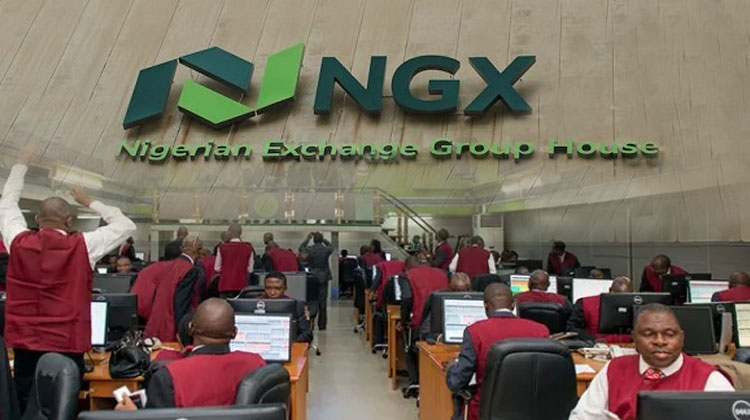




After a dynamic first half marked by aggressive monetary policy tightening and fluctuating investor sentiment, Nigeria’s fixed income market is entering the second half of 2025 with an intriguing outlook. While yields on government bonds and Treasury bills have remained stubbornly high, a growing consensus among analysts suggests a potential moderation in rates, driven by a combination of easing inflation, improved foreign exchange stability, and the Central Bank of Nigeria’s (CBN) evolving policy stance.

The first half of 2025 saw the fixed income market grappling with the ripple effects of the CBN’s hawkish approach. The Monetary Policy Rate (MPR) remained at a high 27.5%, a necessary measure to combat runaway inflation and attract foreign capital. This led to elevated yields across the curve, with short-term bonds and T-bills trading at attractive rates to compensate investors for inflation risk and the high cost of funds. Indeed, in Q2, average FGN bond yields climbed, peaking near 18.7% before retreating slightly to around 17.97% in June, driven by strong auction demand.

However, as we step into H2, several factors are aligning to suggest a potential shift in momentum for yields.
Drivers of Potential Yield Moderation:
Easing Inflationary Pressures: The most significant factor influencing fixed income yields is inflation. Recent data from the National Bureau of Statistics (NBS) shows a slight moderation in the headline inflation rate, reaching 22.97% in May 2025, down from earlier peaks. While still high, this consecutive decline, alongside an easing in food inflation, provides some breathing room. Analysts widely expect inflation to continue its downward trend modestly towards the end of the year, supported by stronger food harvests, waning FX pass-through effects from Naira stabilization, and high base effects from the previous year’s reforms. As inflation cools, the real return on fixed income investments improves, potentially allowing for lower nominal yields.
CBN’s Policy Stance Evolution: The CBN’s primary focus has been price stability. Having aggressively hiked rates for several consecutive meetings, the CBN held the MPR steady at 27.50% in its May 2025 meeting, signaling a “wait-and-see” approach. This pause suggests that the apex bank believes its previous actions are beginning to bear fruit and it needs time to assess the impact. Many analysts now anticipate that if inflation continues its downward trajectory, the CBN might consider a “normalization” of interest rates in the latter half of 2025, potentially leading to a cut in the MPR. Such a move would directly translate to lower bond and T-bill yields.
Improved FX Stability and Inflows: The CBN’s decisive reforms in the foreign exchange market, including the unification of exchange rates and the clearance of FX backlogs, have significantly improved FX liquidity and brought greater stability to the Naira. The increase in Nigeria’s net foreign assets to a decade high is a testament to this. A stable Naira reduces imported inflation and enhances investor confidence, making Nigerian assets, including fixed income, more attractive. The resumption of portfolio inflows, as seen in the successful tapping of the Eurobond market, provides further liquidity to the system, which can help compress yields.
Government’s Borrowing Strategy: While the Federal Government still needs to finance a significant budget deficit (projected at N13.09 trillion for 2025, with N10.67 trillion already raised domestically by May), there are indications of a more measured borrowing approach. The Debt Management Office (DMO) has shown a tendency to issue fewer bonds per auction while deepening liquidity in existing ones, suggesting a desire to avoid overcrowding the market and pushing yields excessively high. If crude oil production increases as anticipated and the government effectively manages its expenditure, the pressure for aggressive domestic borrowing could slightly ease.
The Nuance: Persistent Challenges and Risks
Despite the optimistic outlook for moderation, the fixed income market remains sensitive to underlying challenges:
Fiscal Pressures: The IMF has recently warned that Nigeria’s 2025 fiscal outlook faces serious threats, with a significant risk of exceeding budget deficit projections. If oil production targets are not met and revenue generation falls short, the government may still resort to increased domestic borrowing, particularly at the long end of the curve, which could counteract the moderating effect on yields due to duration and credit risk concerns.
Global Headwinds: Global interest rate movements, particularly in developed markets, and geopolitical uncertainties can still influence capital flows and investor appetite for emerging market debt, including Nigeria’s.
Inflation’s Stubbornness: While easing, inflation remains high. Any unexpected resurgence in price pressures (e.g., due to global commodity price hikes or domestic supply shocks) could force the CBN to maintain its tight monetary policy, thus keeping yields elevated.
Investor Strategy for H2 2025:
For fixed income investors, H2 2025 presents a nuanced opportunity. While yields are currently attractive, especially for short to medium-dated instruments, the expectation of moderation suggests potential capital gains for those who lock in higher rates now. However, caution remains key due to the persistent effect of inflation. Analysts are advising a focus on long-term government bonds, which currently offer coupon yields around 19%, as a strategy to provide stable income, potential capital gains, and protection against re-investment risks should rates decline significantly. The “sweet spot” for many might be the 5-7 year maturity profile, balancing attractive yields with a moderate risk profile.
In conclusion, the Nigerian fixed income market stands at a crucial juncture. The proactive reforms by the CBN, coupled with early signs of disinflation and improving FX stability, paint a picture of potential yield moderation in the second half of the year. While the government’s borrowing needs and global economic uncertainties will continue to exert influence, the prevailing sentiment points towards a more favorable environment for bond investors seeking attractive, yet potentially declining, returns. The key for investors will be to carefully monitor macroeconomic indicators and policy signals to strategically position their portfolios in what promises to be an interesting H2 2025 for Nigeria’s bond market.