

Democracy, in its purest theoretical construction, rests upon an unshakeable foundation: a level playing field where ideas, not the depth of one’s pockets or the weaponization of state apparatus, decide who governs. It is meant to be a marketplace of visions where a market woman’s candidate can compete fairly with an oligarch’s protege.
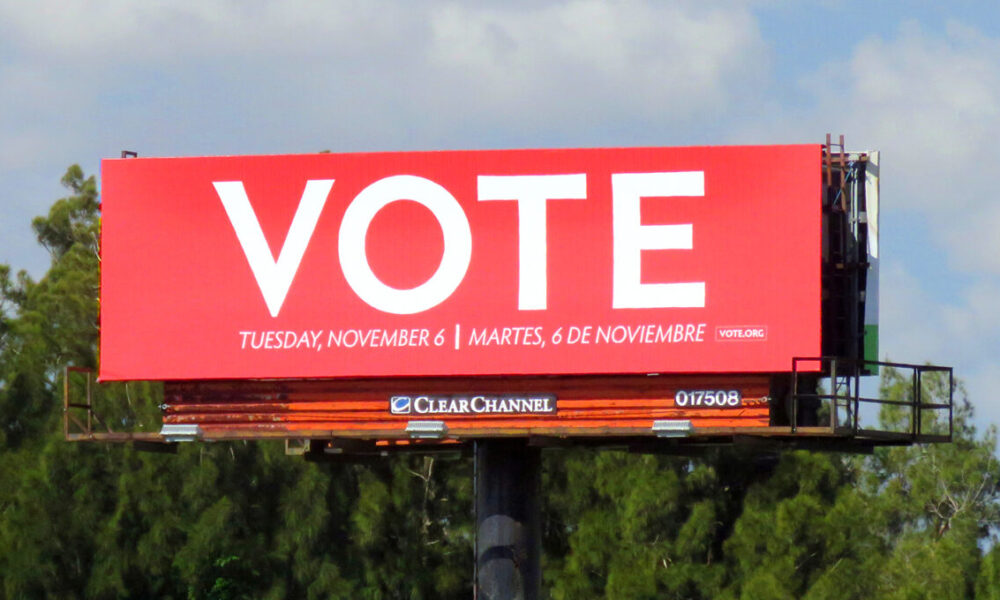
Yet, in Nigeria’s evolving political landscape, this foundational promise is being systematically dismantled, not always by midnight ballot box snatches or raw military coercion, but through a far more insidious, bureaucratized weapon: exorbitant outdoor advertising and political campaign permit fees.
When state signage agencies begin slapping price tags as high as ₦150 million to ₦200 million on political parties merely for the right to deploy billboards, branded vehicles, posters, and handbills within a single state’s borders, the democratic exercise ceases to be an election. It becomes a luxury auction.
This troubling reality raises fundamental questions about the health of the nation’s democracy: Why are these fees so astronomical? Where does state regulatory power end and political sabotage begin? And if politicians are forced to spend billions of Naira just to make their faces and programs visible to voters, how can citizens expect them to deliver genuine dividends of democracy upon taking office?
Regulatory Compliance or Financial Sabotage?
In early 2026, the Enugu State Structures for Signage and Advertisement Agency (ENSSAA) announced a mandatory ₦150 million advertising permit fee for political parties and candidates intending to participate in electioneering activities across the state’s 17 local government areas. The agency defended this mandate under the guise of “preventing visual pollution, protecting public infrastructure, and maintaining professional standards.”
Enugu is far from an isolated offender.
Across the country, state advertising and signage agencies, often acting as the commercial enforce arm of sitting governors, have turned political communications into a lucrative tollgate. For instance, Abia State (ABSSAA), demanded ₦200 million for presidential campaign advertising permits and ₦150 million for governorship candidates.
In addition, Kogi State imposed a ₦150 million fee on presidential candidates and tens of millions for national and state assembly aspirants. Cross River State fixed its presidential billboard permit fee at ₦150 million and governorship at ₦100 million.
Rivers State, demanded ₦75 million for presidential candidates, with individual local government councils adding their own multi-million Naira surcharges.
To put these numbers into context, Kano State, operating under a commercial advertisement framework created by its signage agency, charges a flat, non-discriminatory rate of roughly ₦1.15 million for outdoor structures, proving that environmental management does not require extortionate pricing.
The regulatory defense that these fees exist to curb clutter collapses under the briefest scrutiny. Environmental protection does not cost ₦200 million per candidate. What these states have instituted is a legalized tollgate designed to price out lesser-funded candidates, starve opposition parties of public visibility, and convert public spatial administration into a partisan weapon.
The Hypocrisy of Spending Caps
The sheer hypocrisy of these state-imposed permit fees becomes glaring when juxtaposed against national electoral law. Under the Electoral Act 2026, the National Assembly placed a strict statutory spending limit of ₦10 billion on presidential campaigns and ₦3 billion on governorship races across the entire federation.
Consider the mathematical absurdity: If a presidential candidate were to pay a ₦200 million billboard permit fee across all 36 states and the Federal Capital Territory, the advertisement permits alone would exceed ₦7.4 billion, consuming nearly 75% to 80% of their total legally allowable campaign budget before spending a single Naira on venue rentals, media broadcasts, security, travel, or party agents.
This contradiction has sparked intense legal friction. Oyo State Governor Seyi Makinde, running as the presidential candidate of the Allied Peoples Movement (APM), dragged Abia State Governor Alex Otti, the Abia State Signage and Advertisement Agency (ASAA), and the state legislature to the Abia State High Court (Suit No. HC/214/2026) over the state’s ₦200 million presidential campaign advertising fee.
Makinde and the APM argued that the fee is an unconstitutional, backdoor attempt to “constructively exclude” non-incumbent candidates from public view, rendering compliance with statutory spending ceilings functionally impossible and violating Section 99(2) of the Electoral Act 2026, which forbids state bodies from being used to advantage or disadvantage any candidate.
It’s worthy of note that, when a political system requires an aspirant to spend billions simply to acquire visual presence, public office stops being a public service and becomes an investment portfolio.
How can voters expect a governor or president who spent billions navigating artificial regulatory tolls just to get elected to deliver “dividends of democracy”?
Once sworn in, the primary incentive for such an official shifts from building schools and hospitals to recouping political capital, settling campaign debts owed to godfathers, and war-chesting for the next election cycle. High campaign barriers breed systemic corruption, turn public treasuries into private funds, and alienate dedicated, competent citizens who possess brilliant ideas but lack billionaire sponsors.
The Broader Incumbency Trap
Exorbitant advertisement fees are merely one head of a hydra-headed crisis of political intolerance in Nigeria. State governors routinely exercise autocratic control over physical and digital public spaces. In various states across the geopolitical zones, opposition candidates are regularly denied access to state-owned stadiums, public squares, and civic centers.
Opposition caravans face intimidation, bureaucratic roadblocks, or sudden “renovation closures” of public venues on the eve of scheduled rallies, effectively barring opposition parties from entering certain states for campaigns.
Also, state-owned television and radio stations, funded entirely by taxpayers’ money, are frequently treated as private mouthpieces of the governor’s ruling party. Opposition candidates are routinely denied airtime, refused paid advertisement slots, or completely blacked out from state news coverage, directly violating broadcasting codes that mandate equal access for all registered political entities during election periods.
Speaking on this issue, Musa Aliyu, Director of the Media Advocacy and Technologies Centre (MATEC), warned that these multi-layered tactics are not merely minor political gamesmanship, but active threats that “endanger Nigeria’s democracy by systematically denying citizens the right to hear alternative viewpoints”.
Electoral Law Experts pointed out that under Section 9(1) of the Electoral Act 2026, read alongside constitutional provisions, the Independent National Electoral Commission (INEC) holds primary jurisdiction over regulating political campaigns. While states retain residual powers over outdoor advertising aesthetics, using those powers prohibitively violates the constitutional guarantees of freedom of expression (Section 39) and assembly (Section 40).
The African Democratic Congress (ADC) and other political associations have declared these permit schemes “unlawful, unconstitutional, and undemocratic,” describing them as institutional extortion aimed at creating a one-party hegemony in various states.
While the Advertising Regulatory Council of Nigeria (ARCON) advocates for professional outdoor standards, industry insiders note that state signage agencies have hijacked professional vetting to run commercial protection rackets for sitting incumbents.
How Ethical Democracies Manage Campaign Space
In France, the Conseil supérieur de l’apa and municipal authorities designate specific, standardized poster boards outside every polling station. Each qualified candidate is allocated the exact same surface area free of charge. Commercial hoarding for political campaigns is strictly limited or banned during the official campaign period to ensure wealth cannot buy visual dominance.
In the United Kingdom, under the Electoral Commission and Ofcom regulations, political parties are granted equal, free airtime slots (Party Election Broadcasts) on public and commercial broadcasters based on clear, transparent formulas. State-funded or municipal resources cannot be used to lock out opponents.
In addition, in United States, the Federal Communications Commission (FCC) enforces the “Equal Time Rule,” requiring radio and television stations to treat all legally qualified candidates equally when selling or giving away airtime. In these systems, regulations exist to democratize visibility, not to monetize it.
Reclaiming the Democratic Public Square
If Nigeria’s democracy is to survive and deliver real development to its citizens, the commercialization of political speech must be curbed. When state governments transform signage agencies into partisan enforcement squads, they strip voters of their right to make informed choices.
The Judiciary must act decisively in pending matters, such as the suit filed by Seyi Makinde against the Abia State Government, to establish clear constitutional boundaries.State residual powers over outdoor advertising cannot be weaponized to frustrate federal electoral acts or deprive citizens of equal democratic participation.
Furthermore, INEC, the Federal Ministry of Justice, and civil rights groups must enforce strict neutrality on state-owned media and public spaces. Democracy cannot be put up for sale to the highest bidder. Until political campaign fees are brought down to realistic, non-discriminatory levels, the promise of good governance will remain out of reach, sacrificed on the altar of exorbitant billboards and incumbent self-preservation.