

It is often said that “the way you are dressed is the way you will be addressed.” For a nation as vibrant and culturally significant as Nigeria, the appearance of our President on the global stage is not just a matter of personal vanity; it is a statement of national dignity.

Recently, however, I have found myself squinting at my television screen, asking a question that I suspect many Nigerians are whispering in their living rooms: Who exactly are the handlers of President Bola Ahmed Tinubu?
Let me be clear: I am not here to mock the President’s age. It is entirely human and, frankly, expected for a man of his years to occasionally lose his footing. We saw the slip at Eagle Square during the 2024 Democracy Day parade, and while the internet erupted in memes, I saw only a man.
A fall can happen to a twenty-year-old athlete just as easily as it can to a septuagenarian leader. My concern is not with his gravity, but with his garb, and the optics of his recent diplomatic maneuvers.
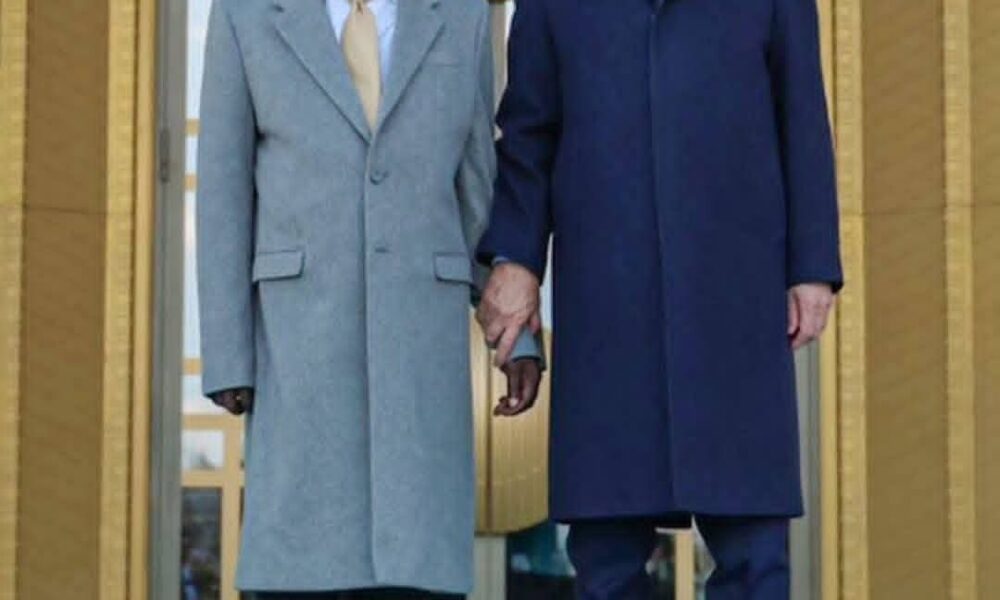
When I watched the footage of the President’s recent state visit to Türkiye, I was struck by a jarring contrast. There stood President Recep Tayyip Erdoğan, looking every bit the modern, sharp, and commanding world leader. Then, there was our President.
I understand the desire to project “African authenticity,” but there is a fine line between cultural pride and a wardrobe that looks cumbersome, outdated, and frankly, poorly tailored for a man of his stature. Why, in the 21st century, do his handlers allow him to appear in flowing, oversized regalia that seems to swallow him up, especially during high-stakes international summits? Compare his silhouette to the streamlined, crisp traditional-modern fusion worn by other African leaders or the sharp suits of his counterparts.
It feels as though his stylists are stuck in a bygone era, failing to realize that a President’s clothing should project strength and agility, not a struggle with fabric. If the goal is to represent Nigeria, why not showcase the sophisticated, world-class Nigerian fashion that dominates runways in Paris and Milan?
Beyond the threads, I am deeply unsettled by the geographic choices of this administration. Why are we seeking such intimate ties with Türkiye, a nation that has, at various points, been “fingered” in intelligence circles or by critics for having a murky relationship with non-state actors?
I find it hard to reconcile our internal struggle against insurgency with a visit to a country that some analysts claim provides a safe haven or logistical support for ideologies that fuel the very fire burning in our North. As a citizen, I don’t understand the moves. Is this a strategic masterstroke in defense cooperation that we aren’t being told about, or is it something more concerning?
This leads me to a darker suspicion. Could it be that the President is succumbing to the subtle, yet firm, pressure of a few Northern clerics? We know the influence these figures wield. We have seen some of them openly defend or “negotiate” for insurgents in the region.
When I see the President making these specific diplomatic pivots, I can’t help but wonder if he is being “handled” by those who see our national security through a narrow, sectarian lens. Are his advisors steering him toward these alliances to appease a domestic power base that has shown a concerning level of empathy for the “bandits” and “insurgents” terrorizing our people?
The President’s handlers, from his tailors to his foreign policy advisors, owe us better. We need a President who looks the part of a 21st-century leader and acts with a clarity that puts Nigerian security above the appeasement of any interest group. If we are to be the “Giant of Africa,” we must stop dressing and acting like we are still trying to find our way out of the 1900s.