

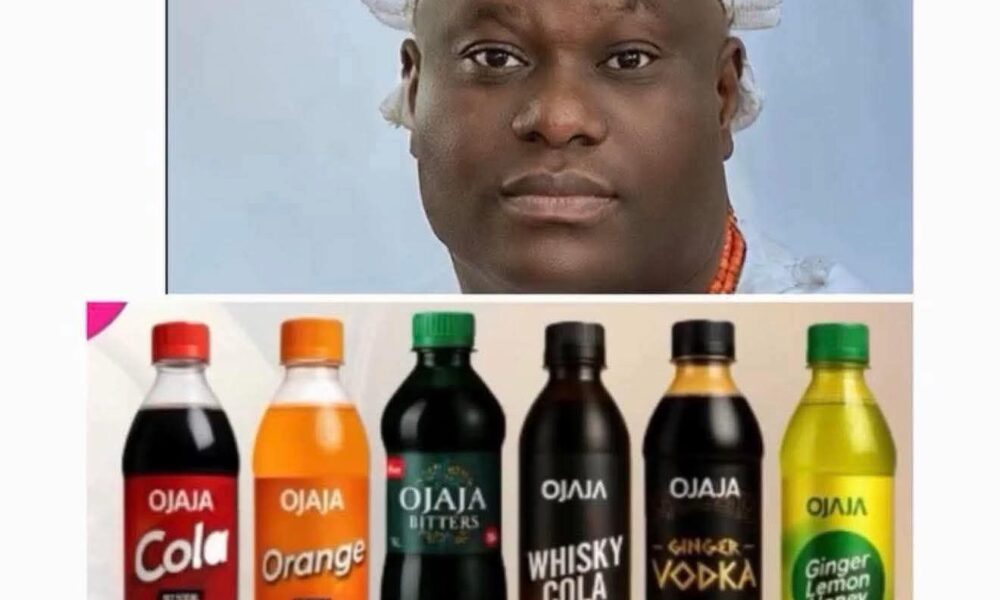




The recent unveiling of OJAJA Soft Drinks by the Ooni of Ife, Oba Adeyeye Enitan Ogunwusi, has sparked a fascinating debate across Nigeria’s boardrooms and palace courtyards alike. When a monarch, whose personhood is considered sacred and whose role is traditionally custodial, steps into the gritty, competitive arena of Fast-Moving Consumer Goods (FMCG), it naturally raises eyebrows.

Is it “regal” to sell soda? Is this an unfair advantage against local giants like Bigi or Rite Foods? More importantly, is this the blueprint for the modern African traditional ruler?

The skepticism regarding “Royal Brands” often stems from a narrow view of monarchy as a purely ceremonial or decorative institution. However, looking at global precedents, the Ooni is not breaking tradition; he is evolving it.
In the United Kingdom, King Charles III (as the Prince of Wales) established Duchy Originals in 1990. Far from being a “vanity project,” it became one of the UK’s most successful organic food and drink brands. It didn’t diminish the crown; it leveraged the “Royal” association with quality and heritage to promote sustainable farming and boost the British economy.
Similarly, in many Middle Eastern emirates, the line between royal leadership and visionary entrepreneurship is nonexistent—think of the Al Maktoum family’s role in transforming Dubai into a global logistics and aviation hub via Emirates Airlines.
The Ooni’s direct involvement follows this “Monarch-as-Catalyst” model. By placing the OJAJA brand at the forefront, he is lending the ultimate seal of “authenticity” to a Made-in-Africa product.
The Nigerian soft drink market is notoriously cut-throat. We have seen the “Cola Wars” between Coca-Cola and Pepsi, and the disruptive emergence of Bigi and Supa Komando. OJAJA Soft Drinks enters this fray not just as another sugary beverage, but as a “healthier, indigenous alternative.”
While some fear this will trigger a hostile battle for market share, it should be viewed as constructive competition. The Ooni’s entry forces existing players to rethink their “local content” strategies. If OJAJA successfully utilizes natural ingredients and supports local farmers, it sets a “benchmark of integrity” that Bigi and others must meet to retain consumer loyalty. It isn’t just a battle for shelf space; it’s a battle for the soul of the African consumer.
Could the Ooni have simply been a “silent investor”? Perhaps. But in the current African climate, visibility is a form of advocacy. By being the face of the brand, the Ooni provides:
Trust: In a market flooded with substandard products, the Royal Seal acts as a guarantee of quality.
De-risking: His public commitment signals to other investors that the Nigerian manufacturing sector is a viable, prestigious space.
Cultural Pride: As the Ooni noted, this is a “declaration that Africa can create.” When he stands by the product, it moves from being a commodity to being a movement.
A behind-the-scenes approach would have been safer, but it wouldn’t have “ignited a movement” in the way this bold unveiling has.
The launch of OJAJA Soft Drinks is a direct hit to the “dependency syndrome” plaguing the Nigerian economy. The economic implications are three-fold:
Value Chain Empowerment: By sourcing ingredients from “our fertile lands,” the brand creates a guaranteed market for Nigerian farmers, reducing post-harvest losses and boosting rural incomes.
Job Creation: Manufacturing plants, distribution networks, and marketing wings provide tangible employment for the youth—a demographic the Ooni has consistently championed.
Import Substitution: Every bottle of OJAJA consumed is a win for the Naira. It reduces the demand for imported concentrates and foreign-owned brands that repatriate profits.
The era of the “subsistence monarch”, who sits on a throne and waits for government stipends or tributes is fading. The Ooni of Ife is demonstrating that the greatest way to “preserve tradition” is to make it economically relevant.
Other traditional rulers should see this as a call to action. Whether it is in agriculture, textiles (like the Adire industry), or tech hubs, monarchs possess the unique ability to mobilize land, people, and social capital. Building “legacy businesses” ensures that the influence of the throne is felt in the stomachs and pockets of their subjects, not just in their history books.
OJAJA Soft Drinks represents a fusion of the sacred and the secular. It is a bold experiment in Economic Sovereignty. By stepping into the forefront, the Ooni of Ife is not lowering the prestige of the crown; he is using it as a lever to lift his people.
If this venture flourishes, it will stand as a beacon, proving that the African “soul” is not just found in our past, but in the excellence of the products we ship to the world.