





The Nigerian market, Africa’s most populous and vibrant, is a fascinating ecosystem where economic rationale often takes a backseat to deeply ingrained social and psychological drivers. For global brands and local entrepreneurs alike, understanding the “why” behind purchasing decisions requires looking beyond price tags and product features.

The real currency in this market is not the Naira; it is trust, often channelled through the powerful networks of tribe (used here to mean social/cultural affinity groups) that ultimately dictate transactions.

In a complex market where challenges like inconsistent product quality, pervasive counterfeiting, and variable service delivery are realities, the Nigerian consumer has evolved a sophisticated system of risk mitigation. This system is primarily built on personal, validated trust.
”Traditional consumer personas, which assume logical trade-offs between features, price, and convenience, simply break down here,” explains Dr. Ngozi Okoro, a renowned Consumer Psychologist and Lecturer at a leading business school in Lagos. “Nigerian consumers often view purchases as relationship investments. They are willing to pay more for an item from a trusted source, a known vendor, a community leader, or a socially validated brand, than for a cheaper alternative from an unfamiliar entity.”
Research from the Lagos Business School further validates this, noting that Nigerians are significantly more likely to trust personal recommendations over official, corporate advertising. Dr. Okoro calls this the “Community Collateral Effect”: a purchase decision comes with an unwritten guarantee from the person who recommended it, placing a value far greater than any warranty. A failure is not just a product failure; it is a social failure. This inherent risk aversion means that for many, trust becomes the cornerstone of decision-making.
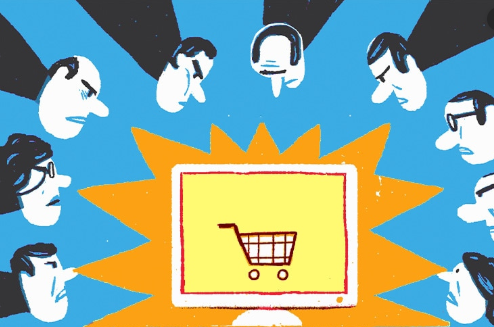
The term ‘tribe’ in the context of Nigerian consumerism extends far beyond ethnic groups. It encompasses consumer tribes—networks of family, friends, colleagues, religious groups, and online communities—who share similar values, social norms, and interests. These groups are the true decision influencers.
”In many Nigerian households, especially for significant purchases, the idea of an individual making a solo decision on a smartphone is a ‘mobile-first illusion’,” asserts Mr. Bayo Adeleke, a veteran brand strategist and CEO of a marketing firm in Ikeja. “The reality is group WhatsApp chats and family consultations where members debate and veto every significant purchase. The consumer is a community member first, and an individual rational actor second.”
This collective decision-making is a feature, not a bug, of the market. Societal norms and the desire to uphold a certain social status within one’s tribe often override personal financial prudence. For example, the purchase of a car or a plot of land is rarely a private affair; it is a declaration that requires the social validation of the inner circle. Marketers must therefore target not just the individual consumer but the entire social validation network that influences them.
Furthermore, this dynamic creates the “Shared Experience” phenomenon, where the experiences of other Nigerians are instinctively trusted more than external corporate messaging because they reflect the unique, shared market realities, such as power fluctuations, traffic delays, and economic volatility.
For a transaction to occur, it must be perceived as fair, not just in price, but in its contribution to the social contract between the brand and the consumer’s tribe. This is where the aspirational element of Nigerian consumer behaviour comes into play.
Dr. Okoro highlights the cultural alignment factor: “Our research shows that a substantial percentage of Nigerian consumers prioritize brands that align with their cultural values over purely global brands. When times are tough, brands that are perceived to be investing in the local community or showing an understanding of local culture are preferred. This is the Value Optimiser archetype, extremely price-conscious, but defining value by the total cost of ownership, which includes the social costs of making a poor or non-aligned decision.”
The rise of e-commerce in Nigeria, despite its phenomenal growth, remains highly dependent on this trust paradigm. Issues like “payment-on-delivery” models became popular precisely because they bypass the trust deficit in institutional and digital payment systems. For a digital transaction to be successful, the brand must first establish an offline, social, or community-based trust equivalent.
Mr. Adeleke concludes with a directive for businesses looking to thrive in this market: “Success in Nigeria hinges on a deep cultural literacy. You cannot just sell a product; you must sell a relationship. You must build trust by ensuring consistent quality, leveraging credible local influencers, and showing genuine respect for the social and cultural networks—the ‘tribes’—that your target audience belongs to. The transaction is the final act, but the drama is all about Tribe and Trust.”
The Nigerian consumer, therefore, is not a simple rational actor. They are a highly sophisticated, socially-networked individual whose buying decisions are an intricate balance of perceived risk, community validation, cultural alignment, and personal aspiration. Any strategy that ignores the powerful, unwritten laws of Tribe and Trust will find its transactions perpetually stalled.