

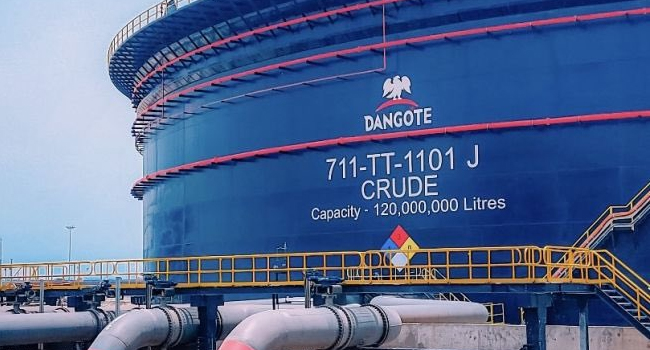




By Godwin Anyebe

The recent announcement that the Dangote Refinery has gained approval to sell petrol directly to marketers marks a significant shift in Nigeria’s oil and gas landscape. As the largest refinery in Africa, the Dangote Refinery has been hailed as a potential game-changer for a nation that has long grappled with fuel importation, supply chain issues, and fluctuating fuel prices. Now that the refinery is poised to supply petrol directly to the market, what can Nigerians expect moving forward?

At first glance, this move seems like a major victory for the Nigerian oil industry. For decades, Nigeria—despite being Africa’s largest oil producer—has been paradoxically dependent on fuel imports due to its inadequate refining capacity. The resulting dependence has led to frequent fuel shortages, price hikes, and a heavy subsidy burden on the government. The Dangote Refinery, with its massive refining capacity of 650,000 barrels per day, promises to reverse this trend by not only refining crude oil locally but also cutting out the middlemen in fuel distribution.
However, while the approval to sell petrol directly to marketers is undoubtedly a milestone, several key challenges and questions remain.
One of the most immediate concerns for Nigerians will be the effect on fuel prices. The hope is that local refining, combined with direct sales to marketers, will reduce the cost of petrol by cutting down on transportation and importation costs. However, it is essential to remember that market dynamics are not solely determined by the cost of production. Global oil prices, government regulations, and the behavior of independent marketers will all play a role in determining the price Nigerians pay at the pump.
For now, it remains unclear whether the refinery’s direct sales will lead to significantly lower fuel prices or simply stabilize prices in the face of global market fluctuations. The removal of subsidies, as recently seen in Nigeria, has already sent fuel prices soaring, and the Dangote Refinery’s involvement may help temper some of these increases, but not necessarily reverse them.
The approval for Dangote Refinery to sell directly to marketers also comes against the backdrop of the government’s controversial subsidy removal policy. With the refinery’s local capacity expected to meet a substantial portion of domestic demand, the argument for reintroducing subsidies weakens further. However, the broader implications for Nigerians remain complex. While subsidies were often seen as a crutch for a poorly managed system, their removal has placed immense financial strain on ordinary citizens. The question now is whether the benefits of a local refinery will offset the economic pain caused by higher fuel prices. Will the refinery’s capacity lead to more affordable energy in the long term, or will fuel prices continue to rise due to market forces?
One of the key benefits expected from the Dangote Refinery’s direct sales to marketers is improved supply chain stability. In the past, fuel shortages have been a recurrent issue in Nigeria, with the country relying on imports and suffering from logistical challenges. With the refinery able to distribute directly to marketers, it is anticipated that supply disruptions will be minimized, ensuring more consistent availability of petrol across the country. However, this depends heavily on the operational efficiency of the refinery itself and the logistics surrounding its distribution network.
The entry of the Dangote Refinery into the market could also have ripple effects for competition. Other refineries, both local and international, may need to reassess their strategies in the Nigerian market. The dominance of a single player like Dangote in the refining industry could lead to a more competitive market or potentially create a monopoly if not carefully managed. It is critical that regulators ensure a level playing field where smaller players and new entrants can thrive, fostering healthy competition and ensuring that the benefits of local refining reach all Nigerians.
The refinery’s ability to sell petrol directly to marketers could have broader economic implications. As the refinery becomes fully operational, it is expected to create jobs, boost ancillary industries, and contribute to Nigeria’s GDP. The shift from importation to local refining will also reduce Nigeria’s foreign exchange burden, easing pressure on the naira. These economic benefits are essential for a country struggling with unemployment and inflation, but they will not be felt overnight. It will take time for the full ripple effects of the refinery’s operations to materialize, and the government must work to ensure that these benefits are equitably distributed across the country.
As with any large-scale industrial operation, environmental and social concerns must be considered. The Dangote Refinery, while offering immense economic potential, will also need to adhere to strict environmental regulations to ensure that its operations do not lead to long-term harm to surrounding communities. The government and relevant agencies must prioritize environmental protection and sustainable practices to avoid the pitfalls that have plagued Nigeria’s oil industry in the past.
Now that the Dangote Refinery has gained approval to sell petrol directly to marketers, Nigeria stands at a crossroads. On the one hand, this move holds the promise of increased local capacity, better fuel availability, and reduced dependence on imports. On the other hand, significant challenges remain regarding fuel pricing, market competition, and ensuring that the benefits of this shift reach all Nigerians.
For the refinery to truly live up to its promise, it will require not just operational success but also careful oversight from regulators, collaboration with independent marketers, and a commitment to transparency. Nigerians will be watching closely, hoping that this new chapter in the country’s refining industry brings tangible relief to the economic pressures they currently face.
The Dangote Refinery’s approval to sell petrol directly to marketers is a step forward, but the journey ahead will determine whether this development becomes a true game-changer or just another promise of unfulfilled potential.