



Stakeholders at the 2026 World Understanding and Peace Day (WUPD) have called for deliberate action to bridge widening social, political and ethnic divides, warning that polarisation has become deeply embedded in global and national culture.

Speaking at the event themed “Bridging the Divide – Building a Culture of Peace in a Polarized World,” Chairman of the occasion, Major General Ike Nwachukwu (Rtd), said rising global polarisation, misinformation, declining trust in institutions and youth frustration are deepening tensions in Nigeria.
He warned that polarisation is no longer accidental but cultural, fuelled by identity politics, economic insecurity, leadership failure and fear of “the other.”
Nwachukwu urged Nigerians to listen before reacting, understand before judging and build shared interests across differences, stressing that peace is not the absence of conflict but the ability to manage it constructively.
Drawing from his military experience, he noted that unity in service transcended tribe and religion, saying Nigeria must embrace shared values and collaboration to rebuild trust and national cohesion.
The keynote speaker at the 2026 World Understanding and Peace Day, Bishop of the Anglican Church of Nigeria, Ilesa Diocese, Rt. Rev. Prof. Dapo Asaju, said the challenge of peace is global and not peculiar to Nigeria.
The cleric noted that nations across the world, including major global powers, are grappling with instability and insecurity despite efforts to promote peace.
Citing the ongoing conflict between Ukraine and Russia, he said Ukraine remains under constant tension over fears of further attacks.
He also referenced the United States, stressing that even world leaders are confronted with security concerns in their own countries.
According to him, even the United Nations continues to seek lasting solutions to global conflicts, underscoring how complex the pursuit of peace has become.
Bishop Asaju urged nations and leaders to remain committed to dialogue and collective responsibility, emphasizing that achieving peace remains one of the greatest challenges facing humanity today.
In his remarks, District Governor of Rotary International District 9113, Rotn. Lanre Adedoyin, said Rotary remains an organisation of action built on selfless service and strong leadership values.
He explained that Rotary’s leadership succession process is seamless and transparent, noting that future district governors are nominated years ahead without rancour, ballot manipulation or conflict — a system he said could serve as a model for Nigeria’s political class.
According to him, Rotary operates under its motto, “Service Above Self,” stressing that members serve voluntarily without expectation of reward.
He added that diversity is one of Rotary’s core values, bringing together people of different backgrounds to pursue one goal — service to humanity.
Adedoyin emphasised that peace starts with individuals. “Peace begins with me,” he said, urging members to correct what is wrong with diligence, coordination and a spirit of goodwill.
He also highlighted the work of The Rotary Foundation of Rotary International, which he described as committed to “doing good in the world” through coordinated and impactful service.
Chairman, World Peace and Understanding Day Planning Committee, Rotn Joe Akhigbe, said that the annual event reminds them of Rotary’s enduring commitment to promoting peace , goodwill, and international understanding.
“As the world’s largest humanitarian and service organization, Rotary continues to make a positive impact in our communities and beyond, particularly here in Nigeria, through impactful projects that advance health, education, poverty alleviation, environmental protection, and sustainable development”, he stressed.
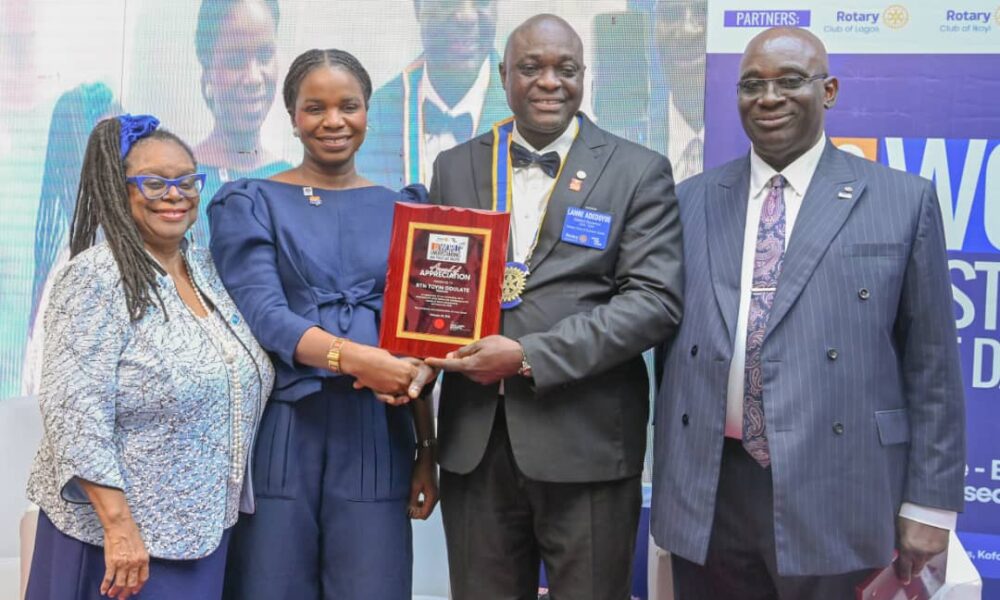
Also, awards were presented to distinguished participants at the 2026 World Understanding and Peace Day in recognition of their contributions to peacebuilding and leadership.
Among those honoured were the Chairman of the event, Major General Ike Nwachukwu (Rtd), and the keynote speaker, Prof. Dapo Asaju, alongside other notable personalities who played key roles in the programme.
The organisers said the awards were in appreciation of their commitment to promoting dialogue, unity and a culture of peace in society.