




By Godwin Anyebe
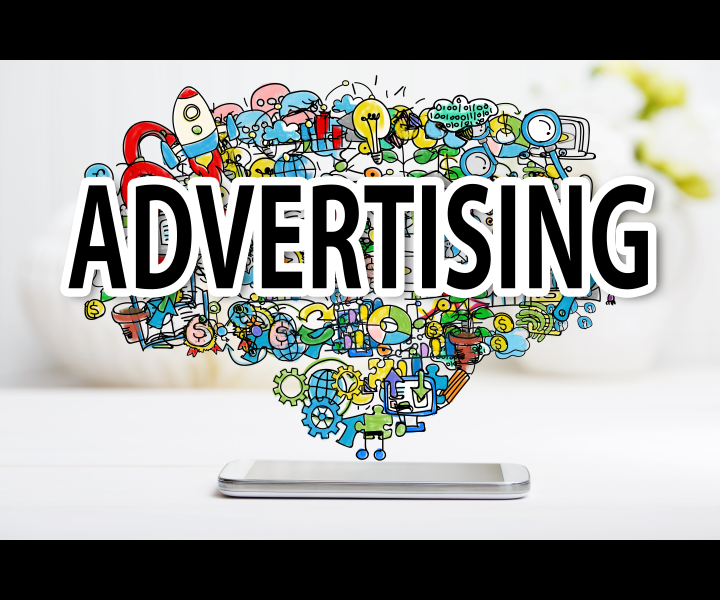
For years, a provocative narrative has circulated within the corridors of marketing firms and academic circles: the “Death of Advertising.” Proponents of this theory point to the rise of ad-blockers, the fragmentation of traditional media, and the sheer exhaustion of consumers bombarded by thousands of messages daily as evidence of a terminal decline.
However, a closer examination of the global and local landscape suggests that the advent of the digital space is not killing advertising; it is acting as a catalyst for its most significant growth spurt in history. Rather than a funeral, we are witnessing a renaissance, a shift from monologue to dialogue, from intrusion to integration.
The concept of the “Death of Advertising” often refers to the obsolescence of the traditional 30-second TV spot and the static billboard as the sole arbiters of brand influence. In the digital age, consumers have gained the power to skip, mute, and ignore. However, advertising is fundamentally the art of persuasion and information. As long as there are products to sell and services to render, the need for advertising remains.
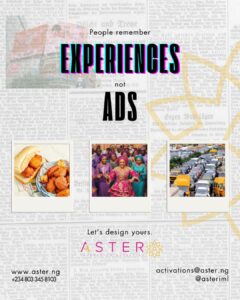
What has “died” is the archaic strategy of “spraying and praying”, broadcasting a generic message to a mass audience and hoping for a result. Today, advertising has transitioned into a data-driven, hyper-personalized discipline. The strategy has shifted from interrupting the entertainment to being the entertainment or providing the utility.
The Director-General of the Advertising Regulatory Council of Nigeria (ARCON), Dr. Olalekan Fadolapo, has consistently maintained in various fora that advertising is undergoing a “revolution,” not an extinction. He argues that while the platforms have changed, the core principles of consumer engagement remain.
Dr. Fadolapo emphasizes that ARCON’s regulatory shifts, such as the transition from APCON to a more robust Council, are designed to manage this digital explosion. He asserts that the digital space has actually expanded the “advertising net,” allowing small and medium enterprises (SMEs) to advertise in ways that were once reserved only for multinational corporations.
Echoing this sentiment, Steve Babaeko, CEO of X3M Ideas and a titan in the Nigerian creative industry, describes digital media as the “Arab Spring” of advertising. He posits that digital technology has democratized communication. To Babaeko, the “old order” where brands talked down to consumers is over. Instead, he argues that the digital space has added to advertising’s growth by forcing agencies to be more creative, agile, and culturally resonant.
For Babaeko, the survival of the industry depends on “besting your last best work” through technological integration rather than clinging to legacy formats.
The advertising industry is no longer a peripheral service; it is a core driver of the Nigerian economy. According to a 2024 PwC study commissioned by ARCON, the value of Nigeria’s marketing communications industry was estimated at ₦605.2 billion as of 2023.
The empirical evidence of its impact is staggering: The Multiplier Effect: For every ₦1 spent on advertising in Nigeria, the nation’s GDP increases by ₦16.5.
GDP Contribution: The sector contributed roughly 0.7% to the GDP in 2023, with projections to reach 1.08% (approximately ₦893 billion) by 2028.
Digital Dominance: Digital media now accounts for 18.5% of the total advertising spend, second only to cable TV, and is growing at a faster rate than any other segment.
The narrative that digital space adds to revenue is supported by global figures. While traditional print and broadcast are plateauing, digital ad spend is surging across all continents.
Projected ad spend for 2025 across the globe include: USA/Americas $429.6 Billion,
Europe (EMEA) $200.7 Billion, Asia-Pacific $361.5 Billion, Africa (Nigeria focus) ₦605.2 Billion and Canada ~$15 Billion.
These figures demonstrate that digital platforms are not cannibalizing the industry; they are expanding the total “pie” by providing more measurable, accessible, and diverse advertising inventory.
To fully harness the potential of the digital advertising space and boost the national economy, Nigeria must take proactive steps:
Incentivize Local Content: As advocated by the ARCON DG, enforcing the 75% local content policy ensures that digital ad revenues stay within the country, supporting local creators and tech hubs.
Infrastructure and Data Costs: Lowering the cost of data and improving internet penetration will expand the “addressable audience” for digital advertisers.
Digital Literacy for SMEs: By training smaller businesses to use social media and search engine marketing, the government can unlock a massive pool of untapped advertising revenue.
Advertising is not dying; it is shedding its old skin. The digital space has provided the industry with more tools, more data, and more revenue than ever before. While the strategy has shifted from mass broadcasting to precision targeting, the purpose remains eternal. By aligning regulatory frameworks with the constitution and embracing the digital revolution, Nigeria can turn its vibrant creative sector into a trillion-naira engine for economic prosperity.