





By Godwin Anyebe

Nigeria’s economic narrative is often framed in terms of deficits—budget gaps, infrastructure shortfalls, policy inconsistencies and so on. Yet, beneath that familiar surface lies another story: one of resilience, grit and entrepreneurial dynamism. In this article, I explore how Nigeria’s economy is being powered not just by macro-numbers, but by the energy of its people; how trends such as diversification, digital growth and youthful demographics are combining with a resolute entrepreneurial culture; and how, despite formidable headwinds, an emerging environment of opportunities offers a hope for transformation. Along the way I draw on expert commentary, academic studies and ground-level observations to capture how Nigeria’s engine is being driven from within.
The economy in transition
In the first half of 2025, Nigeria recorded GDP growth of approximately 3.9 %, with significant contribution coming from the non-oil economy — agriculture, services, and digital sectors. This reflects a gradual shift away from heavy dependence on oil. At the same time, however, Nigeria remains confronted by longstanding structural constraints: inadequate infrastructure, policy volatility, access to finance gaps, high inflation (especially food inflation), and youth employment pressures.
On one hand, the good news:
A youthful population (median age around 18) gives Nigeria a vast labour force and a sizeable potential market — a demographic dividend if harnessed. The digital economy is gaining traction: with mobile technology, internet penetration and fintech solutions growing rapidly, new modes of business and value creation are emerging.
A diversification agenda is evident: although oil remains central, more activity is occurring in agriculture, services, manufacturing and tech-enabled sectors.
On the other hand, the persistent deficits:
Infrastructure remains a bottleneck
Government policy is often inconsistent, regulatory burdens are high. Access to finance for SMEs is difficult; borrowing costs are high. The country must absorb some 3.5 million new entrants to the labour force each year — a huge task.
Thus, the stage is set: Nigeria is neither at the “take-off” stage of a clean model of development, nor mired in permanent stagnation. It is in a transition phase.
What makes the difference, perhaps, is not just the macro numbers, but the human energy and entrepreneurial culture at play.
The entrepreneurial heartbeat of the economy
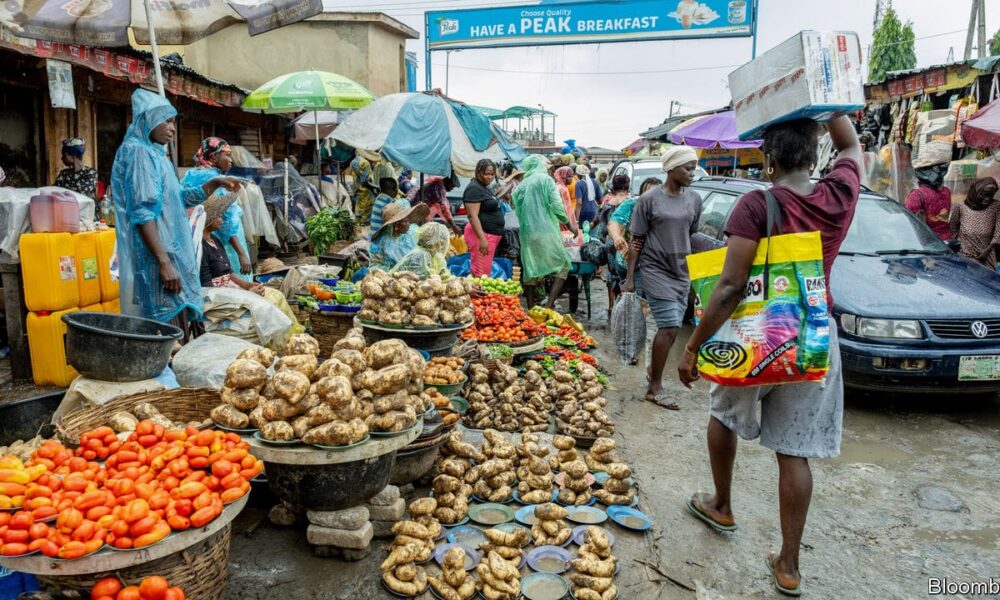
The remarkable thing about Nigeria’s economy is how much of its forward momentum is being driven by entrepreneurs — large and small, formal and informal. The scholarly literature concurs: entrepreneurship is a key driver of job creation, innovation and economic growth in Nigeria
A mindset of entrepreneurship
Research by Dr. Eze Simpson Osuagwu finds that in the Igbo-ethnic region, the traditional apprenticeship system contributes significantly to entrepreneurial success — the business culture emphasises value-creation, mutual aid and lifelong business training.
Likewise, a recent piece in media notes that Nigeria leads the world in entrepreneurial desire: according to the Global Entrepreneurship Monitor (GEM) data, a very high proportion of Nigerian youths believe they have the skills and opportunity to start a business.
In short: many Nigerians don’t just wait for jobs; they seek to create jobs. The spirit is often one of necessity (in response to high unemployment) but increasingly of opportunity (especially in tech and services).
Entrepreneurship in the digital age
The digital economy is providing new pathways. A paper titled Entrepreneurship Development in Nigeria: Overcoming Challenges and Expanding Opportunities in the Digital Economy finds that digital infrastructure is strongly correlated with entrepreneurial activity. Regions with better internet and mobile access show higher levels of business formation.
Similarly, sectoral studies note that fintech, e-commerce, agritech, and logistics startups are proliferating in Lagos, Abuja and Port Harcourt, often supported by incubators and accelerators.
The data suggest that entrepreneurship in Nigeria is not static; it is evolving, leveraging technologies and global best practices even in a tough environment.
Entrepreneurship and job creation
Another study emphasises that youth-led enterprises in Nigeria are quite significant for employment: a survey of young informal businesses found that younger entrepreneurs on average employ 25 % more workers than older ones.
This underscores how entrepreneurship, properly supported, can contribute meaningfully to the enormous job-absorption challenge Nigeria faces.
The challenges remain real
Despite the optimism around entrepreneurial energy, the terrain for Nigerian entrepreneurs is far from smooth. Many of the structural constraints remain, and they shape the experience of business every day.
Infrastructure and logistics
Numerous studies highlight infrastructure deficits — unreliable electricity, poor road networks, lack of broadband or logistics connectivity — as major impediments.
For example:Inadequate transportation systems, power outages, and limited access to reliable internet services hinder business operations and increase operating costs.
In other words, Nigeria’s entrepreneurs often must build resilience just to keep the lights on and the delivery trucks moving.
Access to finance and regulatory hurdles
The issue of finance is persistent. Many entrepreneurs report that borrowing costs are high, banks are cautious, collateral requirements are steep.
Regulation & bureaucracy also weigh heavily: multiple taxes, unclear policies, inconsistent regulatory frameworks all add to the operating burden.
Policy uncertainty and corruption
An unpredictable policy environment discourages risk-taking and scaling. While policy reforms have been announced, implementation remains uneven.
Corruption remains a structural problem: many businesses face extra costs, delays, informal payments. These impose additional risks on entrepreneurs.
Scaling and sustainability
While many Nigerians start businesses, scaling remains challenging. For example, the GEM and business-ecosystem data show that although Nigeria has one of the highest rates of early-stage entrepreneurial activity, many of these remain micro-enterprises, with limited growth.
Hence, the entrepreneurial spirit is strong, but the path to significant scale, export orientation, job creation at high volumes remains arduous.
The interplay of macro-trends and entrepreneurial energy
What makes Nigeria’s story unique is how macro-economic trends (diversification, digital growth, youth demographics) combine with grassroots entrepreneurial momentum to form an engine of potential.
Diversification away from oil
Nigeria’s economy has historically been heavily reliant on oil and gas. But fluctuations in global oil price, revenue shortfalls and volatile foreign exchange have pushed both policymakers and private actors to diversify.
In the first half of 2025, GDP growth of 3.9 % was driven by non-oil sectors: agriculture, services, digital. The growth of the non-oil sector signals that Nigeria’s engine is shifting, gradually, to more broad-based activity.
Entrepreneurs are central to that shift: agribusiness, food processing, logistics, tech solutions are all part of that non-oil expansion. For example, agritech entrepreneurs are leveraging mobile platforms, supply-chain innovations and local value-addition.
Digital economy & leapfrogging
Because infrastructure is weak in many respects (roads, power), Nigeria has the opportunity to “leapfrog” in some sectors using mobile/digital technologies. The soaring penetration of smartphones, mobile money, fintech solutions and digital business models is enabling this leapfrogging.
From fintech to e-commerce to agritech to edtech, Nigerian entrepreneurs are seizing the digital wave. Importantly, digital platforms reduce reliance on some of the more cumbersome legacy infrastructure. Yet they still depend on connectivity, power, regulation — so the advantages are there, but still subject to real world constraints.
Youth demographics as both challenge and opportunity
Nigeria’s median age is around 18 — an astonishingly youthful population. That is, on one side, a huge market: young consumers, tech-savvy, digital-native. On the other side, a huge challenge: employment needs, skills mismatch, risk of social tension if jobs aren’t created.
Entrepreneurship is a natural outlet here. Many young Nigerians prefer starting businesses rather than waiting for formal employment. As data show: 82 % of Nigerian youth perceive a good opportunity for starting a business; 86 % believe they have the skills to start.
So the demographic tailwind is present — but it must be channeled properly through training, resources, policy support, infrastructure and capital.
Expert voices
A number of Nigeria-based economic analysts and practitioners have weighed in on the current state and prospects. They broadly share the view that recovery is real, but the deeper transformation remains work in progress.
Bismarck Rewane, CEO of Financial Derivatives Company Limited (FDC), stated in October 2025 that Nigeria’s economic recovery appears to be real and increasingly tangible: “rooted in fiscal consolidation, declining inflation, and sectoral resilience.” He pointed to improvements in GDP growth, inflation stabilisation, employment and business/consumer confidence.
Taiwo Oyedele, Chairman of the Presidential Fiscal Policy & Tax Reforms Committee, emphasised that ongoing fiscal, monetary and trade reforms place Nigeria on a path of recovery. He noted that the tougher days (eg massive inflation, money-printing, FX instability) are behind.
Olusegun Zaccheaus, Partner at PwC Strategy & Practice West Africa, predicted marginal GDP growth of 3.3 %–3.5 % in 2025, driven by sustained policy reforms. He also pointed to inflation potentially declining to ~26 %. He identified export market opportunities, value-chain enhancement, industry consolidation as medium-term growth drivers.
Kenneth Erikume, another PwC partner, highlighted agricultural policy reforms, taxation reform, and special agro-industrial processing zones as key factors for industrial development in the medium term.
What emerges from these commentary threads is a consistent pattern: yes, momentum is there; yes, the structural conditions are improving; but yes, the real test will be bridging policies to outcomes (jobs, productivity, livelihoods). The mixture of optimism and caution is instructive.
The unique Nigerian narrative
What truly sets Nigeria apart is the interplay of two forces: structural challenge and human ingenuity. While many countries share infrastructure deficits or policy risk, Nigeria’s story is remarkable by the persistence of entrepreneurial energy despite the odds.
This is seen in multiple dimensions:
The sheer drive to start business: The fact that many Nigerians choose entrepreneurship rather than waiting for formal employment, sees opportunities where others see obstacles.
The flexibility and informal ingenuity: In contexts where power is unreliable, entrepreneurs adapt (generators, solar backups); where regulation is burdensome, they find workaround models; where formal finance is difficult, they rely on alternative finance, crowdfunding, mobile-money platforms.
The cultural dimension: As Dr. Osuagwu’s research on the Igbo apprenticeship system shows, Nigeria’s entrepreneurial culture is not just recent but embedded in tradition. That culture helps to reduce fear of failure and promotes value-creation.
The combination of digital and grassroots: You see tech startups in Lagos alongside farmers in the Northwest leveraging mobile tools; you see social entrepreneurs combining business and impact; you see youth entering multiple micro-enterprises concurrently.
The domestic market scale: With over 200 million people and a young population, Nigeria offers a large consumer base. Entrepreneurs can begin local, scale local, but potentially regional or global. Those potential matters.
In sum: the narrative is not just about deficits and policy gaps, but about an engine powered from within — by entrepreneurs, by youth, by adaptation and innovation.
Opportunities for growth
Given the entrepreneurial energy and the favourable demographic and digital trends, Nigeria has multiple opportunity areas where that spirit can be harnessed for growth — provided structural constraints are mitigated.
Untapped markets & services
Large segments of Nigeria still lack basic services — clean energy, efficient logistics, access to finance, irrigation, processed food, quality housing, waste management. These service gaps create entrepreneurial openings. The large domestic market gives scale.
For example: agribusiness value-addition (not just farming but processing, packaging, export) is ripe. Tech solutions for rural/urban logistics. Digital financial services for the un/under-banked. Renewable energy solutions for power-deficit zones.
Technological innovation and leap-frogging
Digital infrastructure gives Nigeria an opportunity to skip legacy constraints. Fintech, mobile money, e-commerce, agritech, edtech, healthtech — these are all sectors where Nigeria’s entrepreneurs are already active. The key will be scaling these models, reproducibility, regional expansion.
The research from Nkwo & Eneiga (2024) shows that access to digital infrastructure is strongly associated with entrepreneurial activity in Nigeria.
Large domestic market and youthful workforce
With a young population, Nigeria has both supply (entrepreneurs, labour) and demand (consumers) for new services and products. That domestic scale is a strong advantage. Entrepreneurs don’t need to start small and local only; they have potential to scale across the country and beyond. Simultaneously, youth ownership of businesses is high (over 67 % of MSMEs are youth-owned) according to one study.
Government initiatives & institutional support
Despite weak state capacity, there is movement. Agencies such as the Small and Medium Enterprises Development Agency of Nigeria (SMEDAN) offer training, advisory support, access-to-finance initiatives (though effectiveness varies).
Policy reforms in fiscal, monetary, trade spheres — such as removal of gasoline subsidy, FX unification, tightened monetary policy — create a more credible macro-environment. These are not sufficient, but they lay a foundation.
Regional and export opportunities
Beyond the domestic market, Nigeria’s entrepreneurs can leverage regional (West Africa, Africa) and global markets — especially with digital connectivity and value chains. Olusegun Zaccheaus pointed to export markets, value-chain enhancement as medium-term drivers.
But what really will unlock the engine?
To turn potential into sustained growth, Nigeria must address certain enablers. The entrepreneurial spirit is necessary but not sufficient. The structural ecosystem must improve. Some key enablers are:
Improving infrastructure & logistics
Electricity reliability, road/rail connectivity, ports, broadband — these are essential. Without them, entrepreneurs incur higher costs and risk. The leap-frogging afforded by digital is helpful, but still depends on reliable connectivity and power.
Access to finance and scaling capital
Start-ups and SMEs need access to capital, including early-stage, growth-stage, and expansion finance. Innovative finance (angel, VC, crowdfunding, fintech) matters, but so does banking reform, credit-market reform, better collateral frameworks.
Also, risk-taking capital must flow into non-oil sectors and value-chain businesses, not just services in major cities.
Regulatory consistency, bureaucracy reduction, corruption mitigation
Entrepreneurs will thrive if they can operate in a predictable policy environment. Consistent regulation, transparency, minimal discretionary interference, streamlined processes. Corruption and rent-seeking raise cost of doing business. As many sources point out, regulatory barriers correlate negatively with entrepreneurial growth.
Skills, entrepreneurial education and ecosystem support
Entrepreneurial education is key. Experts advocate integrating entrepreneurial thinking into primary, secondary and tertiary education. Moreover, mentoring, incubators, accelerators, peer-networks, business support structures matter — especially for scaling businesses from micro to small to medium.
One study found that digital infrastructure support correlates with higher entrepreneurship activity; thus, skills and infrastructure go hand in hand.
Public-private collaboration & institutional strengthening
Institutions like SMEDAN, research centres, universities, tech-hubs, investor networks, and government agencies must collaborate effectively. Entrepreneurs need predictable environments, reliable institutions, and partnerships.
Policy reforms must be sustained: macro-stability, tax reform, trade liberalisation, investment climate improvement.
Putting it all together: Nigeria’s engine in motion
Let’s put together the pieces. Nigeria’s economy is not simply “waiting for” some perfect moment. It is being driven by thousands of entrepreneurs who are responding to the large market, the young workforce and the digital opportunities. Their resilience is remarkable: many have built businesses in adverse conditions, with unstable power, regulatory unpredictability, limited finance and volatile currency.
At the same time, the macro reforms (though still incomplete) are shifting the environment. The growth of the non-oil sector, the rise of tech startups, the large number of micro and small enterprises all point to a broadening base. Experts are picking up on this: the narrative is shifting from “can Nigeria recover?” to “how deeply can Nigeria grow?”.
Thus, the real story is: Beyond the deficits, the engine of Nigeria’s economy is alive — driven by human ingenuity, entrepreneurial resilience, youthful ambition, technological change, and a large domestic canvas. The deficits remain, and they matter — but they no longer tell the full story.
Caution and realistic outlook
Optimism must be anchored in realism. The entrepreneurial spirit alone will not overcome every structural challenge. Scaling from micro-enterprise to globally competitive firm is hard. Export orientation remains low. Productivity remains weak. Jobs created may still not match the numbers needed. Many entrepreneurial ventures remain informal, constrained in growth.
Moreover, policy risk remains. Inflation and food-cost pressures continue to bite (for example, the World Bank warns that food inflation remains the biggest burden on the poor.) The macro environment may still face shocks. Governance and security challenges (in parts of Nigeria) also persist.
Therefore, the optimistic scenario is contingent: if infrastructure improves, finance flows, regulation is consistent, skills upgrade, then Nigeria’s engine can accelerate. If not, the entrepreneurial spirit will keep things afloat, but growth may be slower and more uneven.
Conclusion
At its core, Nigeria’s story is one of human agency. The young, bold entrepreneurs who start businesses on their own terms; the tech innovators, the agribusiness pioneers, the service-providers in underserved markets; the millions of micro-enterprises who despite outages, bureaucracy and high costs, find a way to produce, trade, hire, grow. Their resilience is Nigeria’s asset.
When you add to that the demographic tailwind, the growing digital economy, the diversification away from oil, you find a strong foundation. The environment is imperfect — perhaps deeply so — but the engine is running.
What remains is enlarging that engine: widening access to capital, scaling businesses, building infrastructure, solidifying policy reform, focusing on productivity, exports and value-addition. If Nigeria can align structural reform with its entrepreneurship culture, the result could be a transformative phase of growth — one that moves beyond recovering, toward thriving.
In the end, while deficits (fiscal, infrastructure, institutional) remain central to Nigeria’s economic challenge, they do not define the whole picture. The indomitable spirit of its people — their readiness to create, adapt and build — is what will power Nigeria’s economic engine forward. And for that reason, watchers of Nigeria should not only look at the gaps, but also at the engines moving in the trenches, the micro-enterprises, the startups, the hopeful youth, the entrepreneurs building tomorrow today.